































Volkswagen has officially announced a new version of their renowned California camper van, which will soon hit the markets. This latest iteration is built on the T-series Multivan platform, primarily known for passenger transport, introducing an innovative plug-in hybrid option for the fans of eco-friendly travel.
Timing is set for the second part of this year for the commencement of deliveries, although the new California will not be available in the U.S. market. Nonetheless, some of its features are expected to be incorporated into a similar electric model named ID.California, which corresponds to the upcoming American ID.Buzz. However, the launch of ID.California has been postponed due to VW citing a lackluster demand for electric campers.
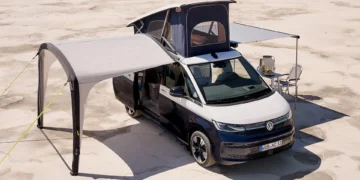
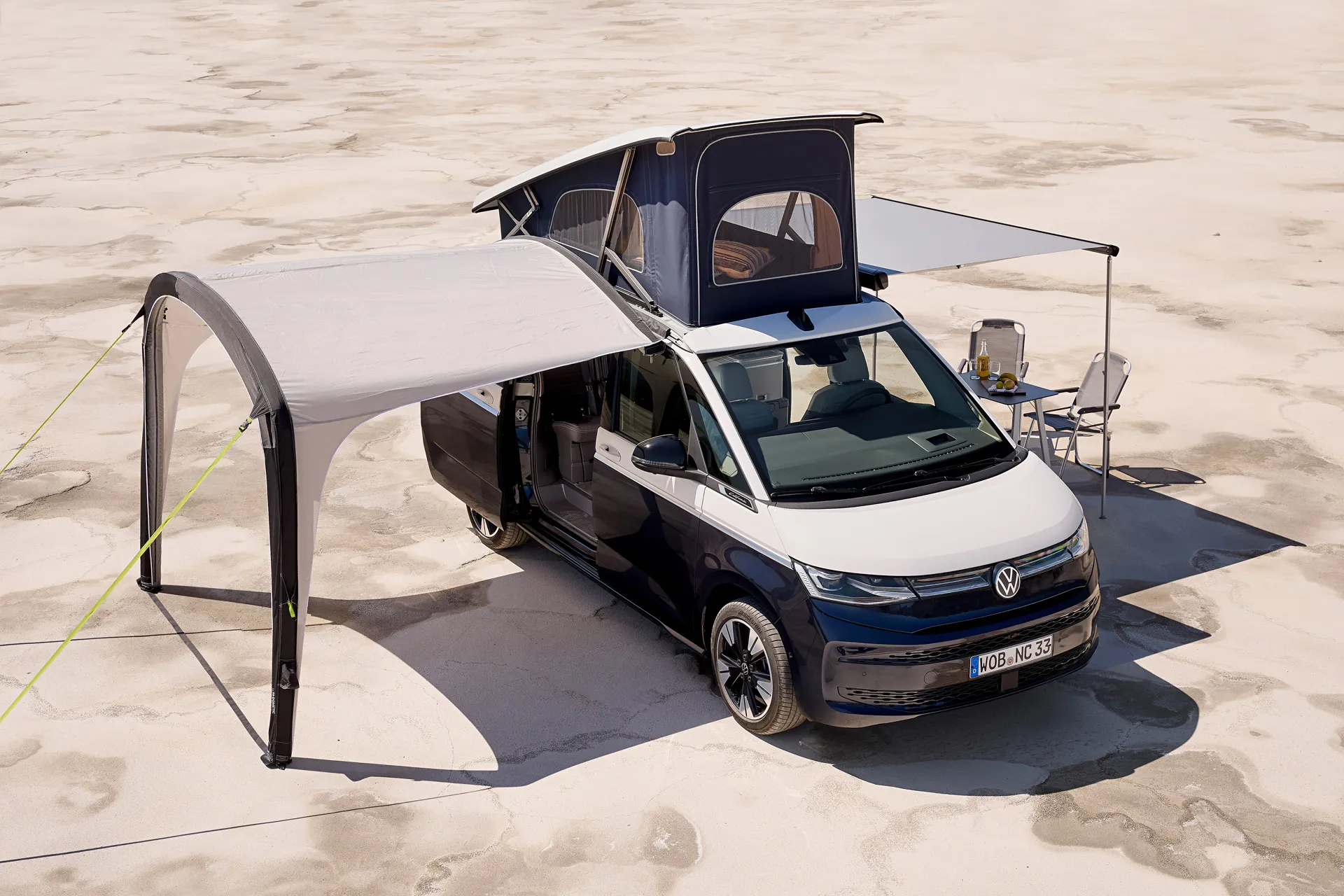
The camper’s standout feature is its reengineered pop-up roof that incorporates a bed— a hallmark of VW’s camper designs. It sports an aluminum design and comes with a front window and a spacious front opening, together with two side windows with integrated mosquito nets within the bellows.
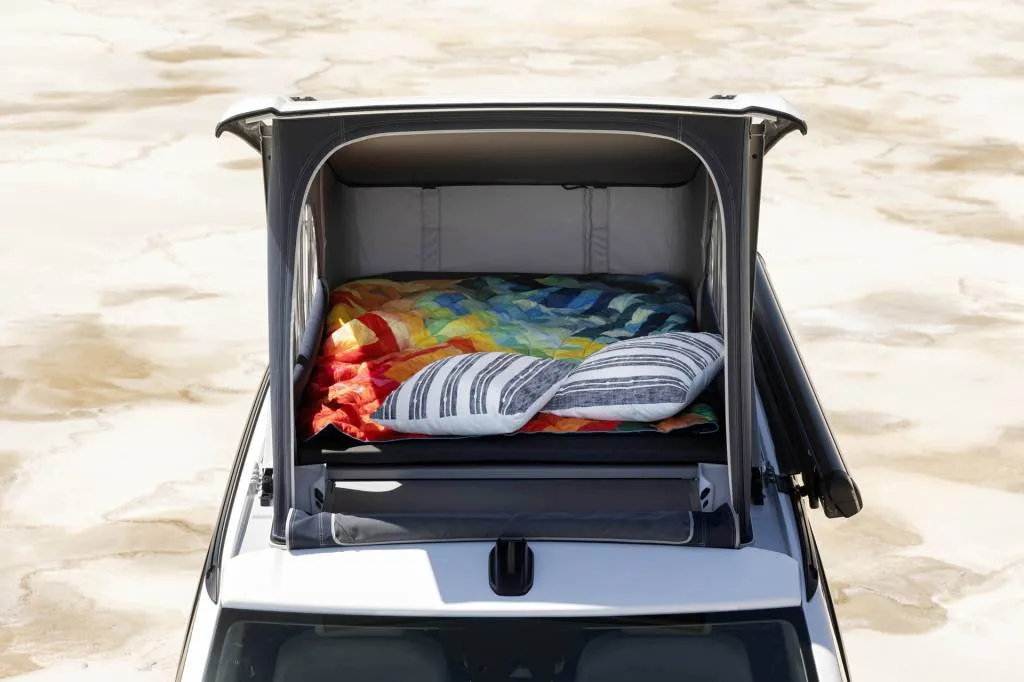
2025 Volkswagen California
The camper van is modeled after the extended version of the Multivan and measures an impressive 203.6 inches in length. It is also the first model to offer sliding doors on both sides, enhancing convenience in and out of the cabin no matter the parking situation. Additionally, an awning for shade or rain protection can be installed on both sides of the California.
Apart from bench seats, the California now has individual seats in the rear, allowing for versatile space management. The front seats have the ability to rotate 180 degrees, providing an inviting, lounge-like setting, while the back seats can fold flat to make room for a bed. Some designs come with only two rear seats, giving the space a more lavish feel.
Selected models are also equipped with a detachable tablet that can control various vehicle functionalities from afar. Furthermore, an efficient double tap on any of the light switches can turn off all the lights, adding to the convenience and user-friendly aspect of the van.
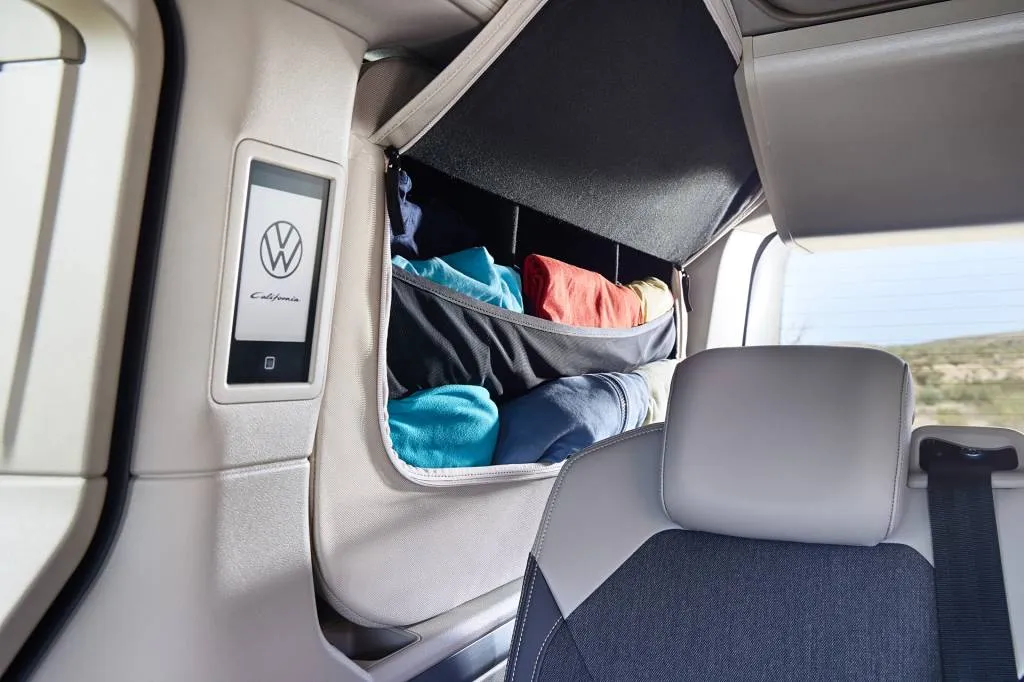
2025 Volkswagen California
Amenities can be augmented with a kitchen that includes a refrigerator. While there is no inner shower, an exterior one can be hooked up to the fresh water tank.
The powertrain lineup comprises of three options: gas or diesel 2.0-liter turbo-4 engines, and the plug-in hybrid variant which weds a 1.5-liter turbo-4 engine to an electric motor, totaling an output of 242 hp, along with all-wheel drive, delivering both performance and versatility. The camper’s tow capacity peaks at 4,400 pounds.
While the California has its roots in VW’s classic T-series of midsize vans, stretching back to the Microbus era, the brand has also spawned California models based on its smaller Caddy van and larger Crafter van, known as the Grand California. In due course, VW is set to introduce the ID.Buzz, paying homage to the beloved Microbus legacy.
FAQ
- Is the new California camper van available in the US?
No, currently the new California camper van will not be available in the US market.
- What is new about the California camper van?
The California camper van boasts a redesigned pop-up roof, sliding doors on both sides, individual rear seats, and an option for a plug-in hybrid powertrain.
- Can you control the van’s features remotely?
Yes, with a removable tablet screen available in certain grades, many of the van’s features can be controlled remotely.
- What powertrain options are available?
There are three options: gas and diesel 2.0-liter turbo-4 engines and a plug-in hybrid option combining a 1.5-liter turbo-4 engine with an electric motor.
- Does the new California have a kitchen or shower?
You can add a kitchen with a refrigerator, and while there is no indoor shower, you can connect an outdoor shower to the fresh water tank.
Conclusion
The reincarnation of Volkswagen’s iconic California camper van promises to bring exciting advancements for the outdoor adventurer, with notable improvements in comfort and convenience, and an all-important leap towards sustainable travel with its plug-in hybrid model. Although it may not be hitting US shores just yet, the new California is setting a benchmark for future electric campers with the potential fusion of classic Volkswagen nostalgia and modern automotive technology.