
























[ad_1]
Evaluating Large SUV Safety: A Fresh Look at Popular Models and Unexpected Outcomes

There’s a common belief that bigger vehicles inherently provide better safety due to their larger crumple zones and robust build, particularly amongst larger SUVs and trucks. In theory, these large vehicles can absorb more impact and are heavier, which tends to enhance body rigidity; in a crash, this means less damage to the vehicle and reduced risk of injury to passengers. But recent testing has shed light on this presumption, delivering a jolt to those who assumed safety was proportional to size.


IIHS Small Overlap Crash Test Uncovers Flaws in Three Major SUVs
On June 6, the Insurance Institute for Highway Safety (IIHS) published the results of crash tests for some of the USA’s most popular full-size SUVs. This category surpasses the size of South Korea’s largest SUVs, such as Hyundai Palisade and Kia EV9. The tested models included the Jeep Wagoneer, Ford Expedition, and Chevrolet Tahoe.
The most recent of the trio, the Jeep Wagoneer, earned the Top Safety Pick (TSP) award, performing well in small overlap tests for both driver and passenger sides. The survival space was largely maintained, but there was still some intrusion into the driver’s footwell area, potentially harming the driver’s lower extremities.


Concerning Test Results for Ford Expedition – Safety Systems in Question
The results for the Ford Expedition were concerning, with significant structural issues revealed. Steering column detachment and a compromised A-pillar meant that the protection of the driver’s space was notably inadequate. Driver leg safety, in particular, couldn’t be assured due to major intrusion.
A critical evaluation of this SUV’s airbags compounded these structural issues: the second-row side curtain airbag failed to deploy, risking severe consequences for the occupants—even though it has a unique second-row seatbelt pre-tensioner not found in the other two models tested.


Chevrolet Tahoe’s Performance Raises Concerns Over Lower-Body Protection
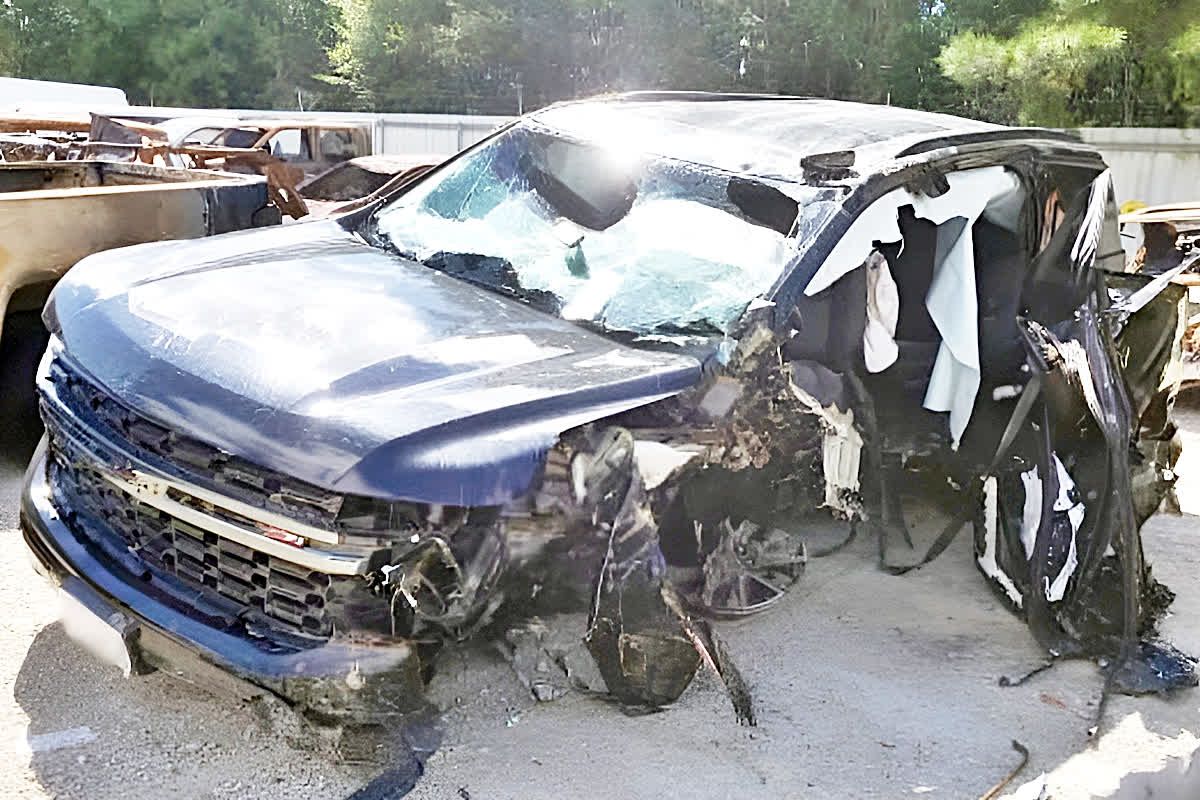
The Chevrolet Tahoe also failed to impress, with its crash test indicating considerable intrusion into the driver’s space and significant risk of lower-body injuries. Passenger safety was also compromised, with data showing a concerning risk for injuries to the right foot. The second-row security was further found to be inadequate, with potential for chest injuries from the seatbelts and a notable risk of abdominal injuries from the lap belt.
When it comes to pedestrian collision prevention, both the Ford Expedition and Jeep Wagoneer scored highly with effective systems. The Wagoneer’s headlights were also noted for their wide-angle and anti-glare capabilities. Conversely, the Chevrolet Tahoe’s emergency braking system and headlights underperformed, with improper nighttime operation providing a safety concern.
[ad_2]
Frequently Asked Questions (FAQ)
What does IIHS stand for?
The IIHS stands for the Insurance Institute for Highway Safety, an organization in the United States that conducts vehicle safety testing.
What is a small overlap crash test?
A small overlap crash test focuses on evaluating a vehicle’s performance when the front corner collides with another vehicle or an object like a tree or utility pole, representing a more challenging and realistic scenario than a full frontal impact test.
What does the Top Safety Pick (TSP) award signify?
The Top Safety Pick (TSP) award is given by the IIHS to vehicles that perform exceptionally well in their crash tests, indicating a high level of crash protection and prevention for the passengers.
Can larger SUVs have safety issues?
Yes, as the recent IIHS tests have shown, despite the general assumption that larger vehicles are safer, design and structural flaws can lead to significant safety concerns in large SUVs.
What should I consider when evaluating the safety of an SUV?
When evaluating the safety of an SUV, consider its performance in various crash tests, the effectiveness of its airbag system, pedestrian collision prevention systems, and the functionality of its headlights and emergency braking systems in different lighting conditions.