


































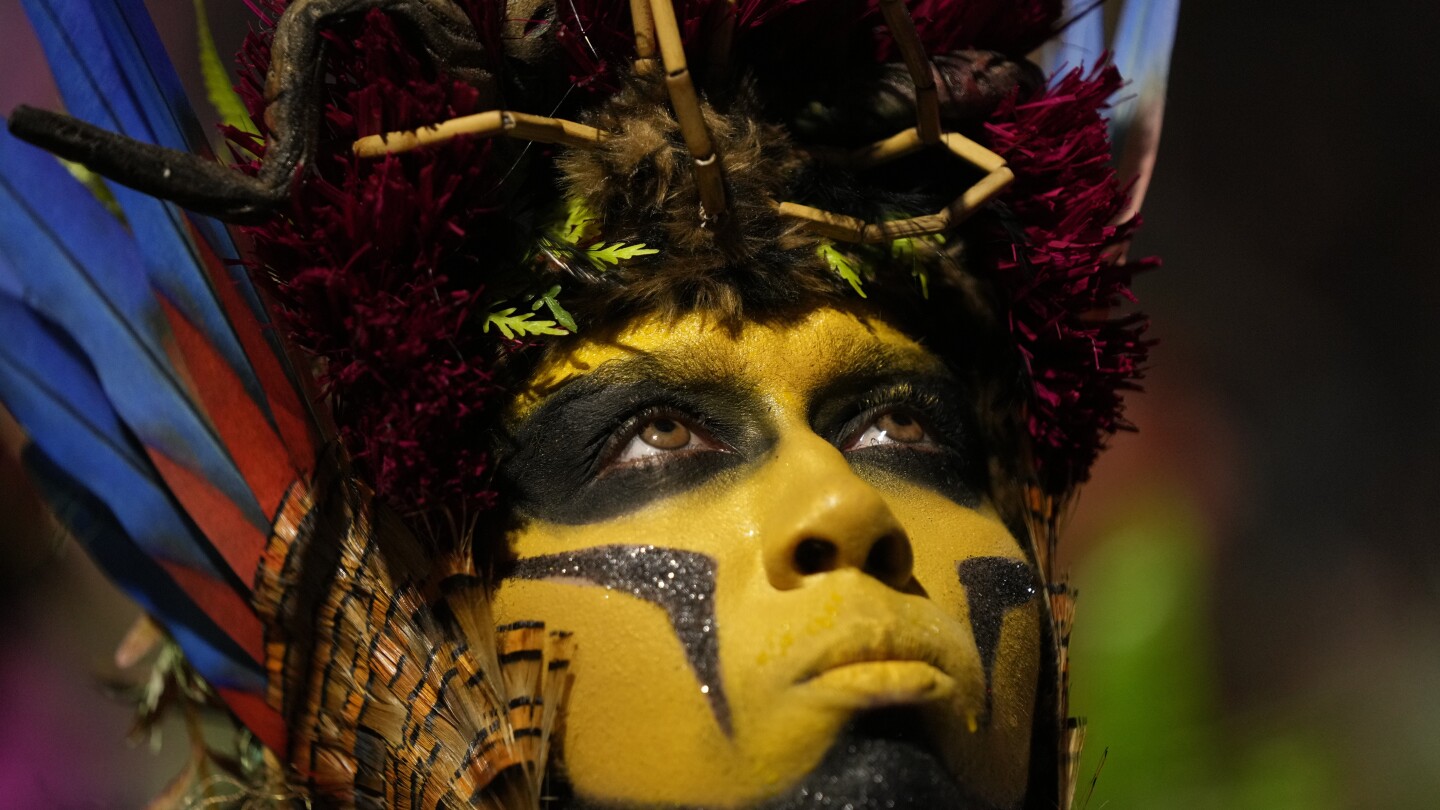
At the heart of the Rio de Janeiro’s festive atmosphere, an important and urgent message echoed through the vibrant parade of the Rio Carnival on Sunday night. Dancers with faces painted in the symbolic red hue of Indigenous traditions and drummers with the phrase “Miners out” boldly displayed, took to the Sambadrome. The spectacle was part of the samba school Salgueiro’s homage to the Yanomami, marking a poignant moment as they represented Brazil’s largest Indigenous tribe through their parade contributions, utilizing floats, attire, and songs inspired by the tribe’s rich cultural heritage and customs.
The parade’s participants chanted, “My Salgueiro is the arrow for the people of the forest,” as they moved through the Sambadrome, their mantra reaching over 70,000 on-site partygoers and millions more tuning in via television. These words were a rallying cry for an Indigenous Brazil and underscored the country’s need to tackle the controversial issue of illegal mining within Indigenous lands.
As President Luiz Inácio Lula da Silva contends with the responsibility of fulfilling his pledge to eradicate illegal mining, his efforts come under scrutiny. Sunday’s parade was particularly timely as it aligns with the first anniversary of Lula’s declaration of a public health emergency for the Yanomami due to malnutrition and diseases such as malaria linked to illegal mining activities.
Davi Kopenawa, a Yanomami chieftain and spiritual guide who collaborated with Salgueiro to ensure cultural authenticity, joined the parade. With him were 13 Yanomami, who traversed the nation to partake in the event. Their participation highlighted a deep concern: the severe impact of unauthorized mining on Yanomami territories, which has led to river pollution, food shortages, and health crises.
Despite initial victories against illegal mining — including the significant reduction of such activities within Yanomami lands and improvements in health conditions — challenges remain. The return of miners, adapting tactics to evade detection, has sparked calls for more effective interventions from various government entities.
During the parade, a critical perspective was vividly presented through certain elements, such as a float adorned with two large military hats decorated with skulls. This was seen as a reference to the potential roles and past complacency of the armed forces in addressing the illegal mining crisis.
In response to the programme’s setbacks, federal workers from environmental and Indigenous agencies have voiced criticism of the military for their perceived failure in supporting anti-mining initiatives. Increased risks, including violence against officials and difficulty in reaching affected communities, continue to trouble those on the frontlines.
The parade by Salgueiro aimed to shed light on the plight of the Yanomami and advocate for a sustainable and determined approach to combatting the mining scourge, ensuring the longevity of both Indigenous communities and environmental sanctity.
___
This coverage that brings to the forefront the intersection of cultural celebration and pressing environmental issues is brought to you by an alliance of reporters focusing on climate and the environment, with financial backing from diverse private foundations.
FAQs
What is the significance of the Rio Carnival parade’s theme?
The parade served as a platform to raise awareness about the illegal mining activities in Indigenous territories, specifically the Yanomami lands, highlighting the environmental and health crises they face.
What urgent message did the Salgueiro samba school convey?
They sent an urgent plea to halt illegal mining operations that threaten the health and environment of the Yanomami Indigenous community.
Has President Lula acted on the issue of illegal mining?
President Lula has taken steps to combat illegal mining by declaring a public health emergency and launching an inter-ministerial task force. Despite initial progress, challenges persist with the resurgence of illegal mining activities.
What actions have been taken against illegal mining?
Brazil’s environmental agency has destroyed illegal aircraft, mining barges, and other equipment, but more comprehensive measures are needed to ensure the protection of Indigenous lands from mining.
How are illegal miners adapting to government measures?
Miners are changing tactics to avoid detection, such as operating at night and using existing pits instead of creating new ones, complicating the enforcement efforts.
Conclusion
The tension between the jubilant celebration of the Rio Carnival and the solemn message of protecting Indigenous territories from illegal mining encapsulates the multifaceted nature of Brazil’s contemporary challenges. As the world witnesses the intersection of festivity and advocacy, it’s reminded of the responsibility to safeguard the rights and well-being of Indigenous communities. The Salgueiro samba school’s participation is not just a moment of cultural expression but a clarion call to action for the Brazilian government and the global community to address the urgent plight of the Yanomami and curtail the environmental destruction caused by illicit mining practices.