


































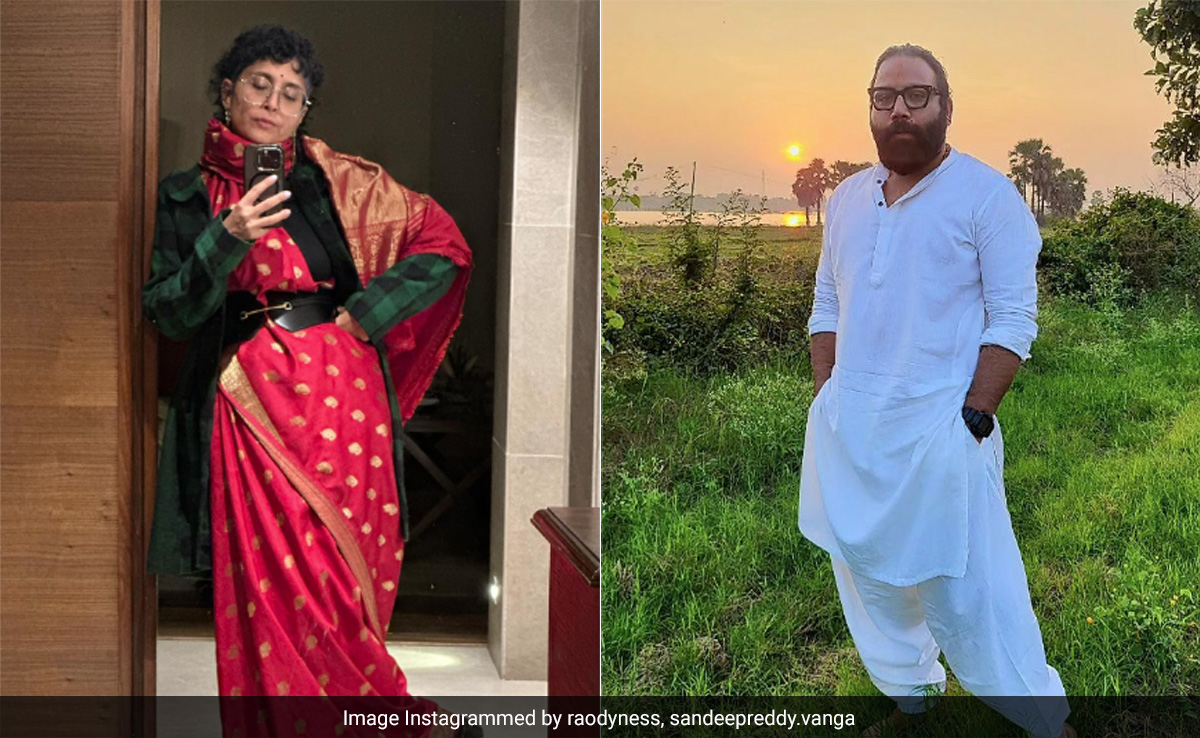

Image (L) courtesy: raodyness, Image (R) courtesy: sandeepreddy.vanga
A heated discussion has emerged involving the personal opinions and cinematic works of Aamir Khan, his ex-wife Kiran Rao, and ‘Animal’ director Sandeep Reddy Vanga. While Aamir Khan has remained relatively silent, he is notably at the center of this debate. The dispute initially began when Reddy Vanga made critical comments about Kiran Rao, who had previously spoken out against movies that depict questionable portrayals of women. Sandeep Reddy Vanga’s films, specifically ‘Animal’ and ‘Kabir Singh’, have been commercial successes yet criticized for their alleged endorsement of misogyny and toxic masculinity. This has prompted Reddy Vanga to often defend his directorial choices.
What followed was a series of remarks made by Reddy Vanga about Kiran Rao’s opinions, Kiran Rao’s response to those comments, and references to Aamir Khan’s work and subsequent apology for past film content. A brief recounting of this public disagreement offers insights into the broader conversation about cinema’s impact on societal views of gender roles and behavior.
Comments from Sandeep Reddy Vanga Directed at Kiran Rao
In an interview, the ‘Animal’ director called out Kiran Rao about her statements criticizing the depiction of stalking in some popular films. Vanga misunderstood Rao’s comments as a direct reference to his films, although she had not specifically mentioned them in her criticisms.
Kiran Rao’s Previous Statement on Gender Sensitization
Rao had previously emphasized the need for gender sensitization in cinema during a session last year, where she pointed out how certain films have enjoyed commercial success while regularizing troubling concepts such as stalking being portrayed as romantically persistent.
Targeting Aamir Khan Through Association
In a striking case of whataboutism, Vanga deflected criticism by referencing Aamir Khan’s past work that also showcased problematic content, suggesting that those questioning Vanga should first examine such content.
Resurfaced Apology from Aamir Khan
Following the outcry over Vanga’s comments, netizens unearthed an old acknowledgment of regret from Aamir Khan, addressing problematic aspects in his earlier films.
Kiran Rao’s Clarification and Response
Rao confronted the allegations in a recent interview, reinforcing her support for responsible filmmaking and pointing out the indirect approach utilized by Vanga in addressing Aamir Khan.
Further Reaction from the ‘Animal’ Film Team
The official ‘Animal’ movie handle joined the fray, expressing their stance on the matter and disputing Kiran Rao’s assertions.
This intricate dispute highlights the ongoing debate about the portrayal of gender and the potential influence of cinema on societal perceptions, sparking conversations across various media platforms.
FAQ about Kiran Rao-Aamir Khan vs Sandeep Reddy Vanga
Q: What initiated the controversy between Kiran Rao and Sandeep Reddy Vanga?
A: The controversy began when Sandeep Reddy Vanga made critical comments about Kiran Rao in response to her earlier criticism of certain film portrayals of women that blur the line between stalking and wooing.
Q: Did Kiran Rao specifically target Sandeep Reddy Vanga’s films with her criticism?
A: No, Kiran Rao did not mention Sandeep Reddy Vanga’s films specifically; she was discussing a broader issue concerning the depiction of women in movies.
Q: What was Aamir Khan’s role in the controversy?
A: Aamir Khan’s role was more indirect. He was brought into the debate by Sandeep Reddy Vanga, who referenced Khan’s past film roles as a counterargument to discussions about irresponsible cinema.
Q: Has Aamir Khan apologized for content in his past films?
A: Yes, a resurfaced video shows Aamir Khan apologizing for content in his past films that could be considered disrespectful towards women, including lyrics from a song in the movie ‘Dil’.
Conclusion
This discussion revolving around Kiran Rao, Aamir Khan, and Sandeep Reddy Vanga serves as a microcosm of the much larger conversation about portrayals of gender in the film industry. While the controversy may be centered around personal remarks and specific films, it opens the door to broader discourse on the responsibilities of filmmakers and the impact of cinema on societal norms and perceptions. Not only does it challenge artists and audiences to reflect on past content, but it also drives the momentum for more conscientious storytelling that respects and empowers all genders.