

































|

A monumental representation of Constantine the Great, the renowned ruler of the ancient Roman Empire, has been reimagined at its full scale after approximately 1700 years have passed. He ascended to the throne in 306 AD and reigned for over three decades during the 4th century. Historically, he is noted for enacting the Edict of Milan in 313 AD, which granted formal approval for the Christian faith.
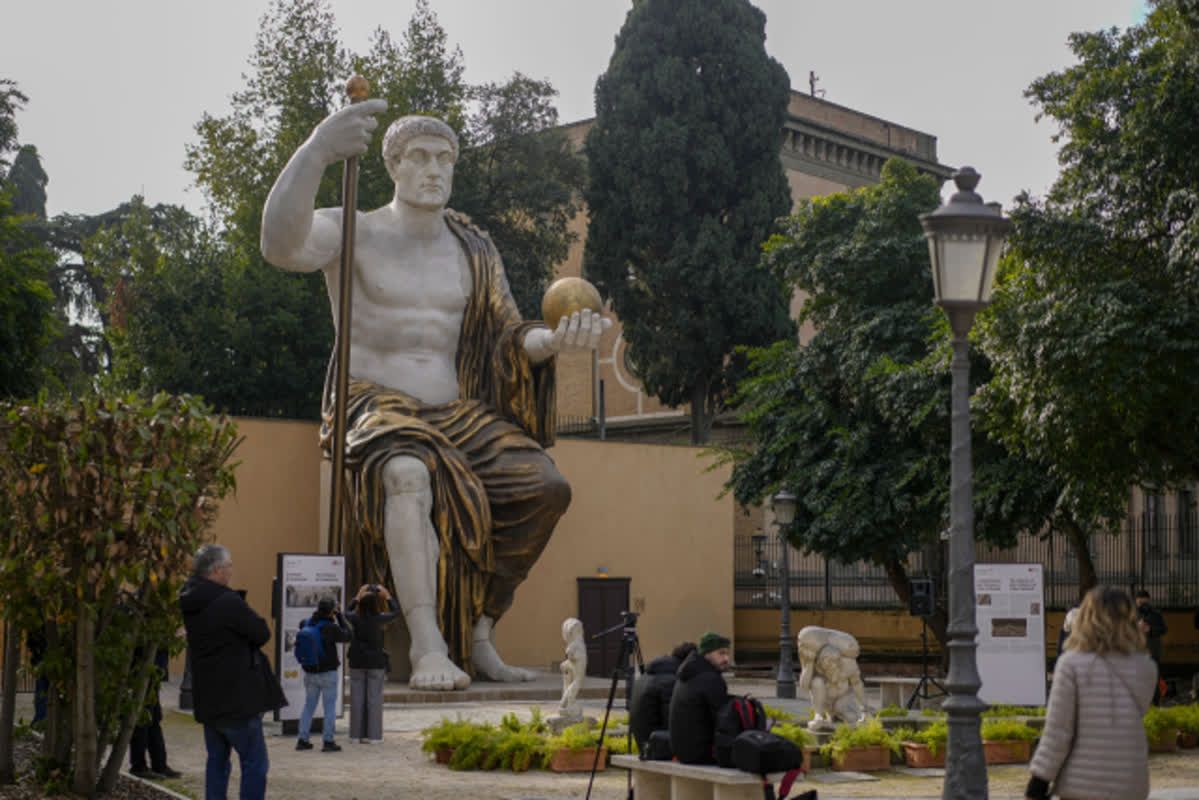
The Roman officials disclosed a towering replica, spanning 13 meters (about 42.7 feet) in height, of Emperor Constantine’s statue at the well-known Capitoline Museums in Rome, on the 6th (by local standards).
Originally crafted in the fourth century AD, Constantine’s statue suffered extensive losses, with only nine pieces like the facial features, appendages, and feet surviving until present.
What was recently presented is not an ancient artifact but a reconstruction, conceived from the surviving marble remains of the original statue. Employing 3D technology, experts have effectively re-envisioned the full figure of the statue as though the missing segments had been located and reattached.
The Fondazione Prada, instituted by the prominent Italian fashion house Prada, provided financial backing for the resurrection of this statue, which was produced in collaboration with the Factum Foundation for Digital Technology. To reconstruct the sculpture, Factum artfully used photogrammetry for laser scanning the extant fragments, seamlessly inferred the absent components, and fabricated the complete figure utilizing 3D printing methodologies.
Fondazione Prada’s archaeologist and art historian Salvatore Settis observed that the statue captures not just aesthetical allure but also the brutal nature of authority. Meanwhile, Adam Lowe, the Factum Foundation’s founding figure, iterated that leveraging technological advancements to reframe our interpretation and valuation of cultural relics is at the heart of Factum’s endeavors.
The current rendition of Constantine’s statue was constructed from polyurethane resin mixed with marble dust. The ornate golden garment adorning the statue was crafted using a blend of gold foil and plaster.
FAQ About the Reconstructed Statue of Emperor Constantine
- What was the original statue of Emperor Constantine made from?
- The original statue’s remnants are made of marble. The colossal figure was from the fourth century AD.
- How tall is the reconstructed statue of Emperor Constantine?
- The 3D printed replica of the statue of Constantine stands at a majestic height of 13 meters or roughly 42.7 feet.
- Who funded the reconstruction of the Emperor Constantine statue?
- The project was generously funded by the Fondazione Prada, an art foundation backed by the luxury Italian fashion label Prada.
- Which organization was responsible for the digital reconstruction and 3D printing of the statue?
- The Factum Foundation for Digital Technology was responsible for the 3D scanning, virtual reconstruction, and actual 3D printing of Constantine’s statue.
- What materials were used to make the replica statue of Emperor Constantine?
- The statue was created using polyurethane resin and marble powder, while its golden tunic was produced from gold foil and plaster.
Conclusion
The rebirth of Emperor Constantine’s statue through the marvels of 3D technology is not just a technological triumph but also an extraordinary link to the ancient past. It allows people today to witness the grandeur of historic Rome in unprecedented detail. This project demonstrates the power of digital preservation and offers a glimpse into how modern technology can revitalize cultural heritage, breathing new life into relics that time has not been kind to. The reconstructed statue, now standing proudly before the Capitoline Museums in Rome, bridges the centuries and serves as a testament to both the legacy of Emperor Constantine and the innovations of the present.