




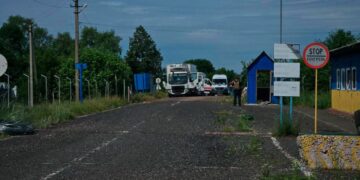

























Persistent demonstrations have led Polish agricultural producers to reactivate blockades on three critical border crossings into Ukraine, including the Medyka-Shehyni, Uhryniv-Dolhobychuv, and Zosin-Ustyluh checkpoints, according to Ukraine’s State Border Guard Service’s announcement on February 12.
These renewed protests follow earlier blockades which occurred between November 2023 and January. The fresh wave was initiated on February 9 at Medyka-Shehyni, Hrebenne-Rava-Ruska, and Dorohusk-Yahodyn crossings, with a brief pause at Medyka during the weekend.
The State Border Guard Service’s Andrii Demchenko reported to Ukrainska Pravda that Polish farmers began their demonstrations near the Zosyn checkpoint around 10:10 am, planning to permit only three large trucks to pass every hour.
Vehicles such as cars, buses, transportation carrying humanitarian assistance, and smaller vehicles are still allowed to transit with usual protocols, Demchenko clarified.
Demchenko also communicated that approximately 150 protestors and 20 pieces of farming equipment initiated a blockade at the Uhryniv-Dolhobychuv, allowing only limited truck traffic. Each hour, two trucks, weighing up to seven and a half metric tons, may cross in both directions, with a similar allowance for lighter trucks entering Poland.
The Medyka-Shehyni checkpoint blockade dictates that only one truck can cross per hour, though the movement of cars and buses should remain unrestricted, he added.
As a direct result of these blockades, an extensive queue of 1,050 trucks has reportedly built up on the Polish side awaiting entry into Ukraine as of the morning of February 12.
Incidents involving the dumping of crops from Ukrainian trucks by Polish protestors near the Dorohusk crossing were recorded, leading to Ukraine’s Ambassador in Poland, Vasyl Zvarych, calling for a forceful reaction from Polish officials.
The Polish farmers preemptively scheduled the protests, voicing discontent with what they perceive as inaction by Warsaw and the European Union to manage the wave of Ukrainian agricultural imports. Previous Polish carrier and farmer blockades took a stance against these imports and the easing of trucking regulations for Ukrainian drivers.
Polish agricultural groups claim that the Ukrainian imports lead to unfair competition, despite Krakow outlawing grain imports and several other commodities from Ukraine in 2023. Still, other products such as sugar or poultry remain concerning.
Possibly in response to the blockades, agreements were met with Polish officials on January 6 to meet some of the protesting farmers’ demands, inducing subsidies for corn, enhancements to liquidity loans, and the preservation of the agricultural tax at 2023 levels.
However, dissatisfaction led to renewed blockades starting January 24, targeting roads across Poland, fueled by grievances relating to imports from Ukraine and other non-EU nations.
Furthermore, the Solidarity trade union declared that they would mount blockades at Ukrainian border transitions from February 9 to March 10, blaming Polish and EU authorities for their supposed lackadaisical approach to the issue.
Frequently Asked Questions (FAQ)
- What specifically are the Polish farmers protesting against?
Polish farmers are protesting against what they view as unfair competition from Ukrainian agricultural imports and are demanding government action. - What crossings have been affected by the protests?
The Medyka-Shehyni, Uhryniv-Dolhobychuv, and Zosin-Ustyluh crossings have been blocked as part of the recent protests. - Have similar protests occurred in the past?
Yes, there were similar blockades between November 2023 and January, initially causing disruptions at four key crossings. - How are authorities responding to these blockades?
Ukrainian authorities have called for Polish officials to decisively handle the protests, especially after incidents such as Polish farmers dumping Ukrainian agricultural goods. - What actions have been taken to address the farmers’ concerns?
Some negotiations concluded earlier resulted in agreements to meet certain demands by the farmers, including subsidies and loan improvements. However, dissatisfaction persists, leading to the renewal of protests.
Conclusion
The reemergence of border blockades by Polish farmers at the Poland-Ukraine crossings underlines the ongoing economic tensions amidst the competing agricultural markets of both nations. While temporary measures have been taken to ameliorate the farmers’ concerns, the situation remains volatile, signifying deeper underlying issues in the cross-border trade relationship that necessitate more sustainable solutions. The impact of these blockades extends not only to the immediate traffic congestion and disrupted supply chains but also brings to the forefront the complexities of international agricultural policies and market competition within the EU and its neighboring countries.