
































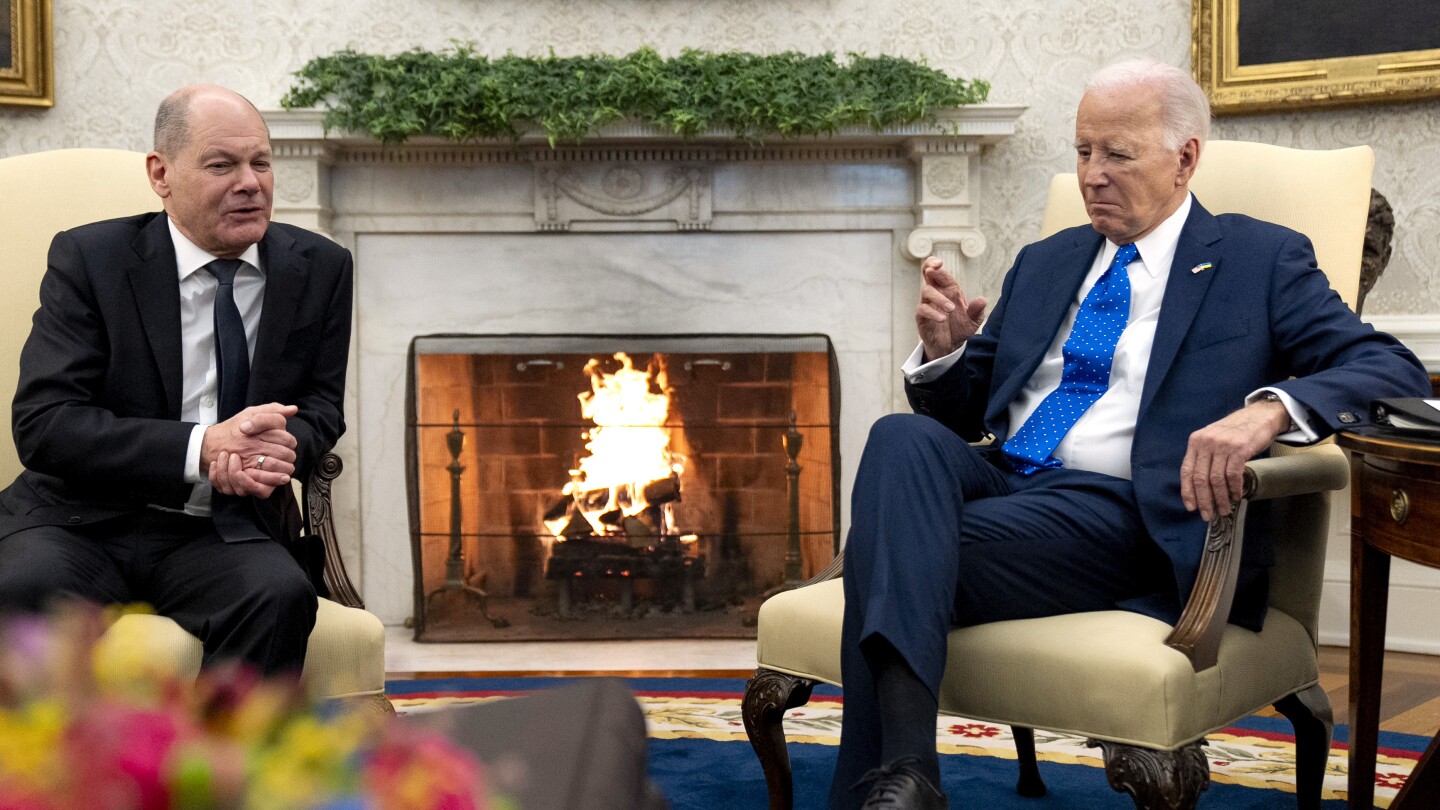
During a significant meeting with Germany’s Chancellor Olaf Scholz, President Joe Biden denounced the ongoing resistance by House Republicans to approve additional aid for Ukraine, labeling the inaction as “close to criminal neglect.” The discussion aimed to address the critical need for continued support for Ukraine in its conflict against Russian aggressions.
Amidst rising concerns in Europe, President Biden highlighted the potential peril of failing to supply Ukraine with necessary aid. The United States has been a pivotal ally in Ukraine’s defense, contributing significantly to its resistance against the ongoing Russian invasion. However, the current political standoff poses risks to this support.
Chancellor Scholz’s visit to the U.S. capital underscored the gravity of the funding deadlock and its implications, not only for Ukraine but for international stability at large. The Republican stance has been rooted in financial caution, positing that the U.S. cannot indefinitely fund Ukraine’s war efforts. They suggest Europe should take on a greater financial role.
Biden and Scholz jointly urged the U.S. Congress to maintain its alliance with Europe by supporting Ukraine. The potential failure to do so attracted stark criticism from Biden, and drew attention to the broader consequences that could ensue, such as enabling disinformation campaigns and geopolitical threats, as cited by Scholz in a Wall Street Journal op-ed.
Efforts to separate Ukraine aid from other funding issues in Congress were discussed as a potential solution to the impasse. The German Chancellor also highlighted the contributions of European Union nations, including Germany’s efforts to provide significant military support despite internal fiscal challenges.
Despite the U.S. Congress’s reluctance, Biden and Scholz shared confidence that a resolution to the funding stalemate would be reached, emphasizing the need for swift action to support Ukraine’s defense capabilities. The officials suggested that delays in funding could inform Moscow’s military strategies, potentially hindering Ukraine’s ability to sustain its defense.
Scholz also advocated for enhanced military support from other European nations, underscoring that the collective response to the crisis should not rest solely on Germany’s shoulders. Both leaders indicated the importance of a united signal to Russia that international support for Ukraine will not wane.
___
This report includes contributions from AP video journalist Tracy Brown. Moulson reported from Berlin.
Frequently Asked Questions (FAQs):
- Why is U.S. aid to Ukraine important?
- U.S. aid to Ukraine is crucial for the country to defend itself against Russian military aggression and maintain its sovereignty. Without support, Ukraine would struggle to repel the invasion and suffer greater losses.
- What is the issue with the funding for Ukraine?
- House Republicans have blocked new U.S. funding for Ukraine, expressing concerns over the continuous financial burden and urging European countries to contribute more.
- How much aid has the U.S. provided to Ukraine so far?
- The U.S. has already supplied Ukraine with about $111 billion in aid since the onset of Russia’s invasion.
- What are the potential consequences of not providing further aid to Ukraine?
- Failure to provide further aid could weaken Ukraine’s defense capabilities, lead to a Russian victory, and destabilize global security. It may also embolden disinformation campaigns and tactical exploitation by adversaries.
- What is Germany’s stance on supporting Ukraine?
- Germany is advocating for continued support for Ukraine and has committed over 7 billion euros for weapon deliveries, despite its own budget constraints. Chancellor Scholz has urged other European nations to boost their military support for Ukraine as well.
Conclusion
The conversation between President Biden and Chancellor Scholz underscores a serious impasse in the U.S. Congress regarding aid to Ukraine. The resistance from House Republicans to approve more funding poses a significant challenge to Ukraine’s defense against Russian aggression. The leaders’ joint call for urgency and solidarity in supporting Ukraine reflects the high stakes involved not just for Ukraine’s sovereignty, but for the global order and security. It is a pivotal moment that emphasizes the importance of international alliances and the role of the U.S. and European nations in maintaining stability in the face of threats to democracy and peace.