
































[ad_1]
Stellantis’ shift away from the V8 engine in iconic models such as the Dodge Charger and Ram 1500 has been met with mixed feelings. Its new 3.0-liter twin-turbocharged Hurricane inline-six engine is set to replace the venerable 5.7-liter Hemi and on the surface, it ticks all the boxes with more power and better performance. However, there’s a snag that was unexpected: worse fuel economy.
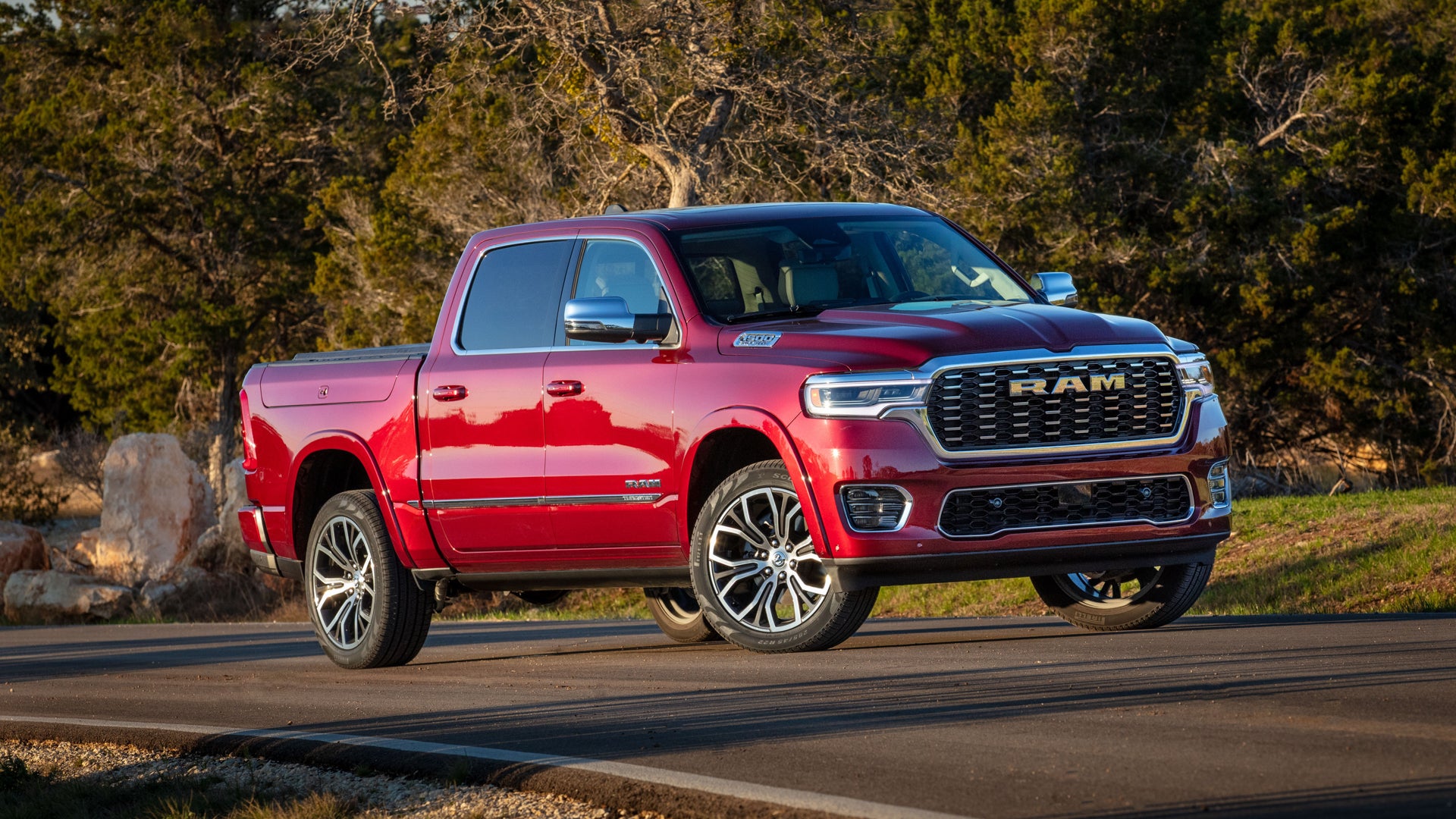
The Environmental Protection Agency (EPA) has released the fuel efficiency ratings for the 2025 Ram 1500, which has three engine variations: a base 3.6-liter Pentastar V6 with mild-hybrid technology, a standard Hurricane I6, and a high-output Hurricane I6. Despite having two less cylinders and a smaller engine, the Hurricane I6 falls short in fuel economy when compared to the older V8.
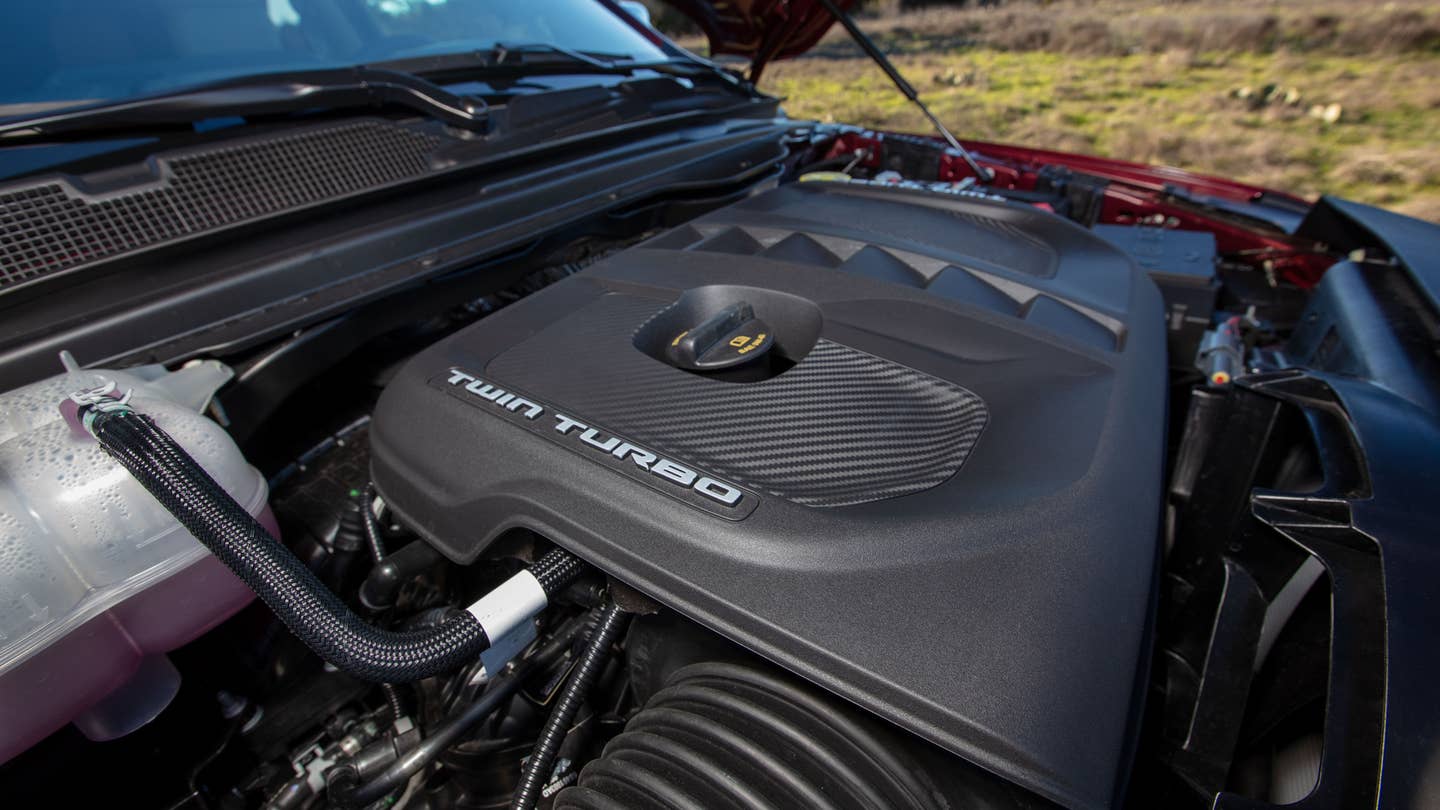
As expected, the high-output Hurricane I6 guzzles the most gas, generating 540 horsepower and 521 lb-ft of torque, but only managing 15 mpg in the city, 21 mpg on the highway, and an overall 17 mpg combined. This is in stark contrast to the older Hemi V8 which boasted an 18 mpg city, 22 mpg highway, and an overall 19 mpg combined, proving to be more economical in every category. The high-output I6 also demands premium 91-octane fuel, further increasing its running costs. While it is more powerful than the previous 395 hp, 410 lb-ft V8, the efficiency trade-off is evident.
Stellantis
The standard-output Hurricane I6 does fare slightly better but still disappoints, with EPA ratings of 17 mpg city, 24 mpg highway, and the same 19 mpg combined as the old V8. Even with its increased power output of 420 hp and 469 lb-ft, its efficiency is only marginally improved over the V8. Over a span of five years, the new standard-output I6 could save owners $2,000 in fuel costs compared to the V8, but the high-output I6 could see a $3,500 increase in fuel expenditures over the old V8 in the same period.
Most likely, the majority of Ram buyers are going to opt for the standard-output I6 because it delivers ample power for common truck duties and offers moderate savings on fuel over time according to EPA estimates. Those who select the high-output version, which is available exclusively on higher-end trims like the Limited and Tungsten, are probably less concerned about the fuel economy hit due to the overall luxury and performance of these models.
Undeniably, the new Hurricane I6 engines overshadow the old V8 in terms of raw power, providing better speed, towing capabilities, and payload capacity. However, this comes with the price of lower fuel efficiency and higher running costs, accentuating the fact that emissions reduction doesn’t always align with enhanced fuel savings or overall ownership costs.
Got tips? Send ’em to tips@thedrive.com
[ad_2]
FAQs about the 2025 Ram 1500’s High Output I6 and Fuel Economy
- What engines are available for the 2025 Ram 1500?
- The 2025 Ram 1500 offers three engine options: a base 3.6-liter Pentastar V6 mild-hybrid, a standard-output Hurricane I6, and a high-output Hurricane I6.
- How does the fuel economy of the new Hurricane I6 compare to the old Hemi V8?
- The high-output Hurricane I6 has a fuel economy of 15 mpg city, 21 mpg highway, and 17 mpg combined which is lower than the Hemi V8’s 18 mpg city, 22 mpg highway, and 19 mpg combined.
- Does the new I6 require special fuel?
- Yes, the high-output Hurricane I6 engine requires 91-octane fuel.
- What is the potential long-term fuel cost saving or expense?
- The standard-output Hurricane I6 might save owners $2,000 over five years compared to the Hemi V8, while the high-output I6 could cost $3,500 more than the V8 in fuel over the same period.
- Will customers care about the reduced fuel economy?
- Customers opting for the standard-output Hurricane I6 might appreciate the savings over time. However, those who choose the high-output I6, often found in premium trims, may be less concerned about fuel economy in favor of performance and luxury features.
Conclusion
The new high-output Hurricane I6 engine powering the 2025 Ram 1500 provides a commendable increase in power and performance compared to the retired Hemi V8. Yet, this advancement in engineering does not translate into better fuel economy. While some customers will embrace the more potent standard-output I6 for its potential savings, those who go for the high-performance high-output version must be prepared for the additional costs at the gas pump. It is clear that Stellantis’ aim to decrease emissions with the new engines does not straightforwardly equate to an improved ownership cost or enhanced fuel efficiency for all customers.