
































In a recent surge of violence, Israeli air strikes have resulted in the death of 44 Palestinians, including a significant number of children, in Rafah, a city in the southern part of the Gaza Strip. This escalation occurred just after Israeli Prime Minister Benjamin Netanyahu announced preparations for a potential ground invasion, prompting an evacuation of civilians.
Netanyahu did not specify a timeline, but this development sparked panic within Rafah, where more than 2.3 million people reside, many of whom have already relocated there following previous Israeli instructions. The territory is now under threat, with limited options available for further refuge.
Rafah, which lies adjacent to Egypt, has been identified as Hamas’s last bastion in Gaza by Israeli forces, following conflicts that have lasted for more than four months and were triggered by an attack attributed to Hamas on October 7.
The mention of a possible ground offensive by Israel has led to stern warnings from Egypt’s Foreign Minister Sameh Shoukry, who predicted disastrous consequences and suggested Israel’s ultimate goal might be to expel Palestinians from the region.
Shoukry highlighted efforts being made by Egypt to broker peace and secure a lasting ceasefire, as well as the release of hostages taken on October 7 in exchange for Palestinian prisoners held by Israel. He acknowledged the complexities involved in the negotiation process.
Tensions have also surfaced between Israel and the United States, with concerns that a ground invasion in Rafah would result in a catastrophic situation without a clear plan for civilians. Despite advisories to civilians to shelter in Rafah, Israel has continued air strikes in the area.
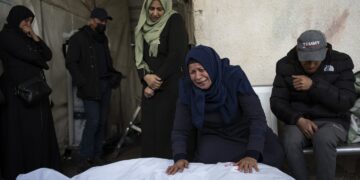
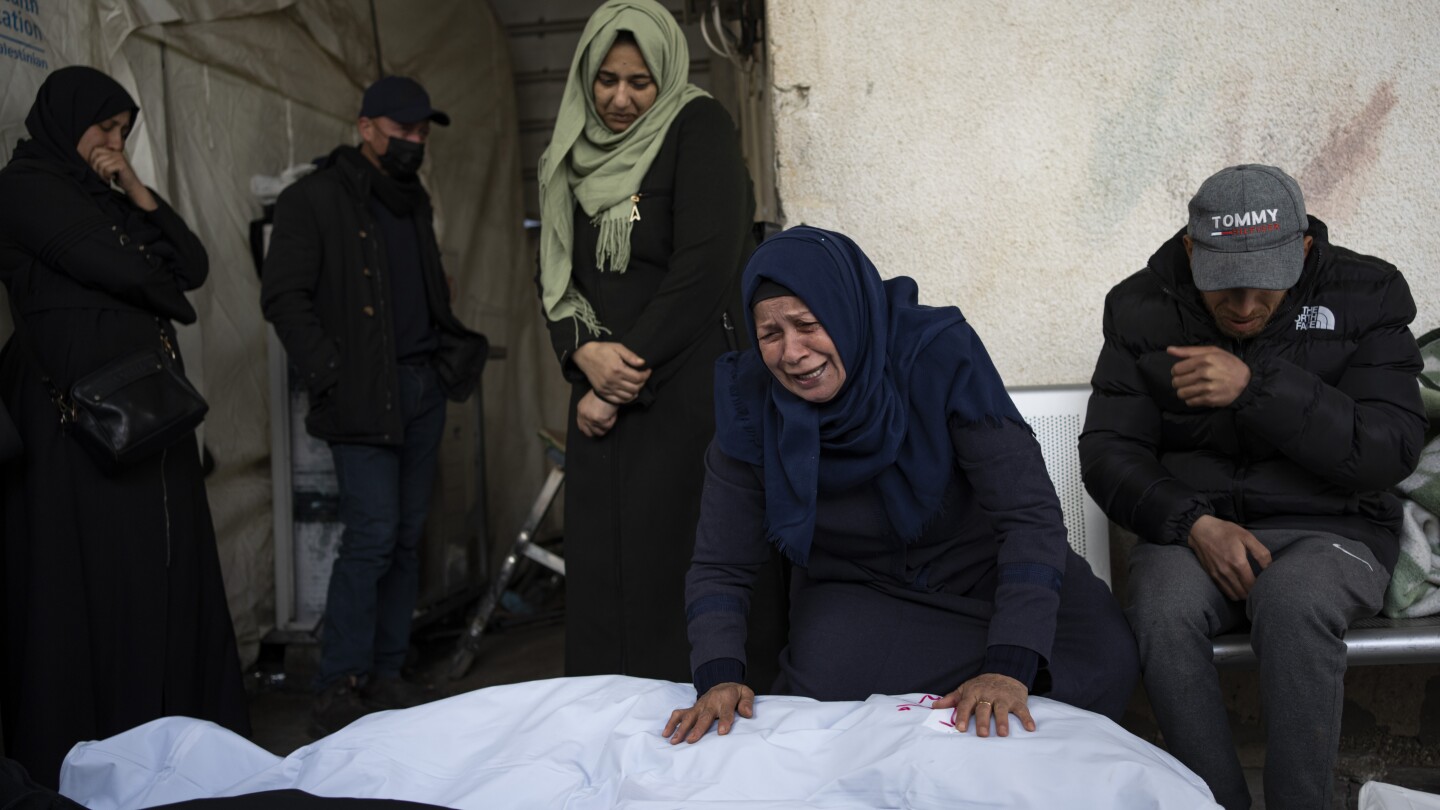
Recent air strikes caused multiple casualties, with overnight strikes leading to the deaths of 28 individuals from three separate families, including 10 children, some no older than 3 months.
Fadel al-Ghannam, who lost family members in one of the strikes, expressed his anguish and criticized the international community for what he perceives as indifference to Palestinian suffering.
Additional strikes took more lives, including 11 people in a single home, and attacks on policemen and civil officers. In Khan Younis, near Rafah, Israeli gunfire impacted a hospital, leading to further casualties and trapping many within the facility.
The ongoing conflict has led to a humanitarian crisis within Gaza, with severe shortages in food and medical supplies, and the displacement of around 80% of the population.
Death Toll in Gaza Exceeds 28,000
Recent reports from the Gaza Health Ministry indicate an alarming death toll of over 28,000, with thousands more injured. This toll is a grim reminder of the cost of this continued conflict.
Hostilities began in earnest when Hamas militants crossed into Israel, resulting in a current state of war and a significant number of casualties and hostages.
Despite criticisms, Israel attributes the loss of civilian life to Hamas’s strategy of operating within populated areas and states that a more precise approach to combatting Hamas is challenging.
All eyes look to the closed Rafah border crossing for the passage of humanitarian aid, and any influx of Palestinians into Egypt could strain the longstanding peace treaty between Israel and Egypt.
Warnings from the international community continue, with German Foreign Minister Annalena Baerbock expressing grave concerns over the potential for a humanitarian disaster.
North Gaza Also Experiences Significant Losses
The violence has wrought devastation in northern Gaza as well, with many now homeless. Among the destruction, an ambulance team was found dead, highlighting the danger to those providing aid and assistance.
For further coverage, the Associated Press provides ongoing updates at: https://apnews.com/hub/israel-hamas-war.
FAQ Section
- What triggered the recent escalation of the conflict in Gaza?
The escalation was triggered by an attack on October 7 by Hamas militants, leading to ongoing hostilities between Israel and Hamas. - What has been the international community’s response to the situation in Gaza?
Various international actors, including Egypt and the United States, have expressed concerns about the impact of military actions on civilians. Diplomatic efforts are ongoing to reach a ceasefire and manage the humanitarian crisis. - How significant is the destruction and loss of life in Gaza?
The destruction has been widespread, especially in northern Gaza and Rafah, with the death toll surpassing 28,000, alongside thousands of injuries and massive displacement.
Conclusion
The recent wave of Israeli air strikes in Rafah and the heightened possibility of a ground invasion underscore the dire state of the Israeli-Palestinian conflict. With a staggering death toll, widespread destruction, and an ever-growing humanitarian crisis, there is a crucial need for an immediate and effective response to ensure the safety of civilians and facilitate a peaceful resolution. Global leaders continue to monitor the situation closely, making it clear that the international community cannot ignore the tragic events unfolding in Gaza.