


































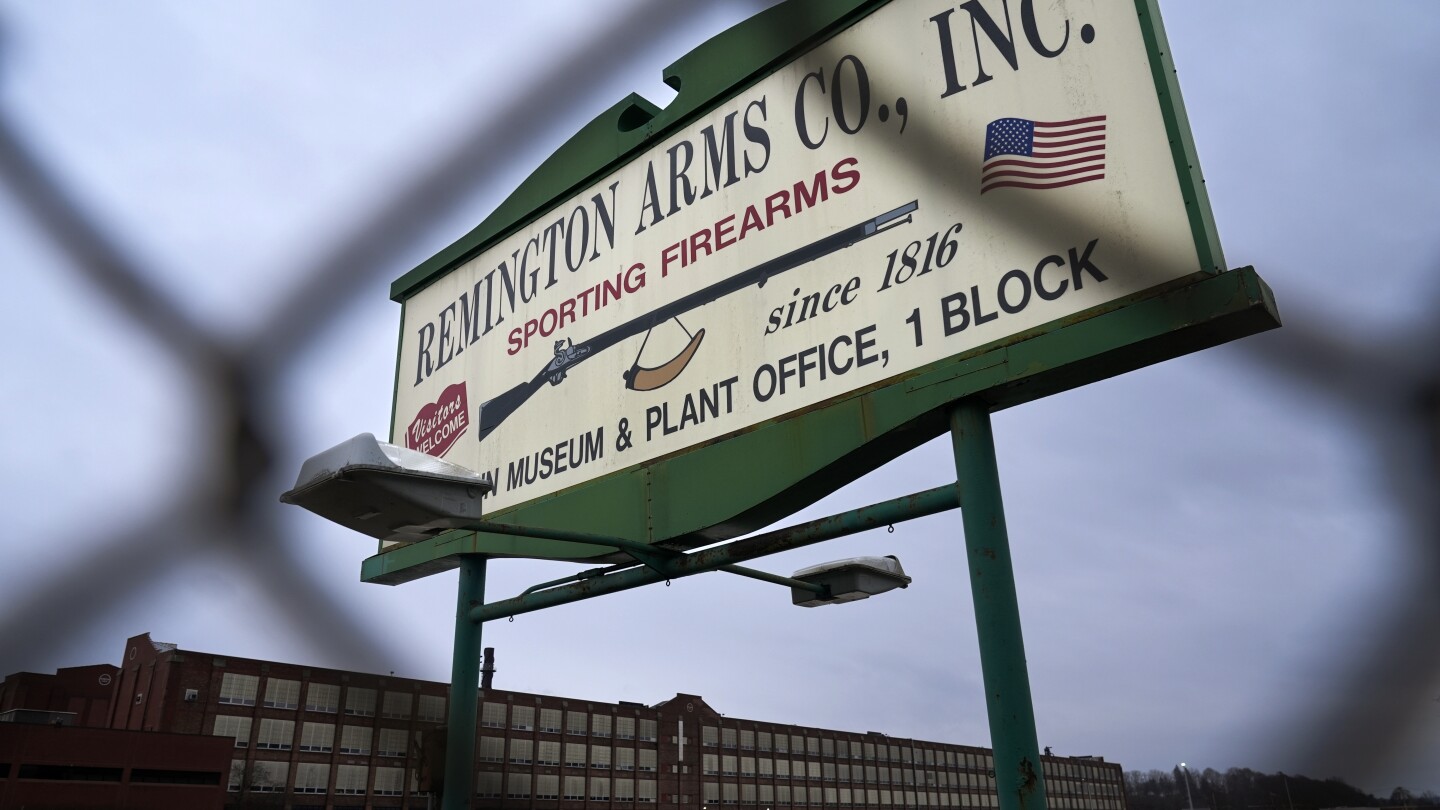
For two centuries, the village of Ilion, N.Y., has been synonymous with Remington, a name that forged its identity with the manufacturing of rifles and shotguns. Generations of families have been gainfully employed by the Remington factory, situated squarely in the village’s core. Now, with the announcement of the factory’s closure, Ilion faces a future devoid of its most defining characteristic.
The news has hit the community hard, as the legacy of the iconic American gun-maker will cease in the place where Eliphalet Remington crafted his first barrel in 1816. Remington’s company recently revealed their decisions to close the Ilion factory, driven by operational costs, and consolidate work in the state of Georgia.
Remington’s story has been tumultuous in recent years, entangled with lawsuits following the Sandy Hook shooting and bankruptcy filings that reshaped its ownership and workforce. Now only about 300 employees remain where once 1,300 worked.
The impact of Remington’s departure on Ilion, a village of 7,600, will be profound, symbolically and economically. Jim Conover, a 40-year retiree of Remington, likened it to losing a part of the family. The sentiment is widely shared in a community that considers gun-making part of its DNA.
Not only do residents face the daunting truth of transitioning the factory space for new uses, such as manufacturing and retail, but also coping with the loss of a deep-rooted identity.
While attempting to charter a new course, village officials must deal with an estimated annual financial deficit of roughly $1 million stemming from the factory’s closure. The plant’s future remains uncertain, despite it being listed for sale at $10 million.
Remington’s relocation is motivated by several factors, including “production inefficiencies” and the legislative atmosphere in New York, which is perceived to be less welcoming towards the firearms industry than Georgia.
Remington’s move mirrors that of other gun manufacturers, such as Smith & Wesson, who have also headed to states with more gun-friendly profiles. Still, the loss for Ilion is personal, echoing throughout the village’s streets, businesses, and homes.
As the village anticipates the factory’s cessation of operations, they acknowledge the inevitable hard choices lying ahead. Yet, Mayor John Stephens expresses confidence in the site’s future reuse and asserts that regardless of Remington’s physical presence, the connection to Ilion will indelibly remain.
Frequently Asked Questions (FAQs)
- Why is the Remington factory closing in Ilion, N.Y.?
- Remington is closing its Ilion factory due to the high cost of maintaining a historic plant and moving its operations to Georgia, which is considered more supportive and welcoming of the firearms industry.
- What is the significance of the Remington factory to the village of Ilion?
- The Remington factory has been integral to Ilion for 200 years, providing employment across generations and defining the village’s identity. It is as central to Ilion as the car industry is to Detroit.
- What impact will the factory’s closure have on Ilion?
- Ilion is expected to lose around $1 million annually in revenue without the Remington factory, including utility payments and taxes. There is also a significant emotional and historical loss for the community.
- What are the future plans for the Remington factory site?
- The site has been listed for sale for $10 million. Local officials hope for a diverse use of the space, potentially including manufacturing, retail, and residential developments.
- When did Remington first start operating in Ilion?
- Remington began its operations in Ilion in 1816 when Eliphalet Remington forged his first rifle barrel there.
Conclusion
The impending closure of the Remington factory in Ilion, N.Y., marks the culmination of a 200-year era. The village, intrinsically linked to the gun-manufacturing giant, now faces the challenge of reinventing itself both economically and culturally. While this transition may be painful and difficult, the history and legacy of Remington will forever remain woven into the fabric of Ilion, a testament to a bygone epoch of American industry.