

























[ad_1]
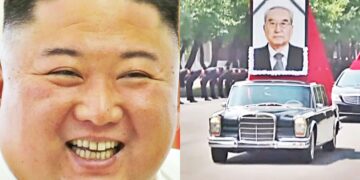
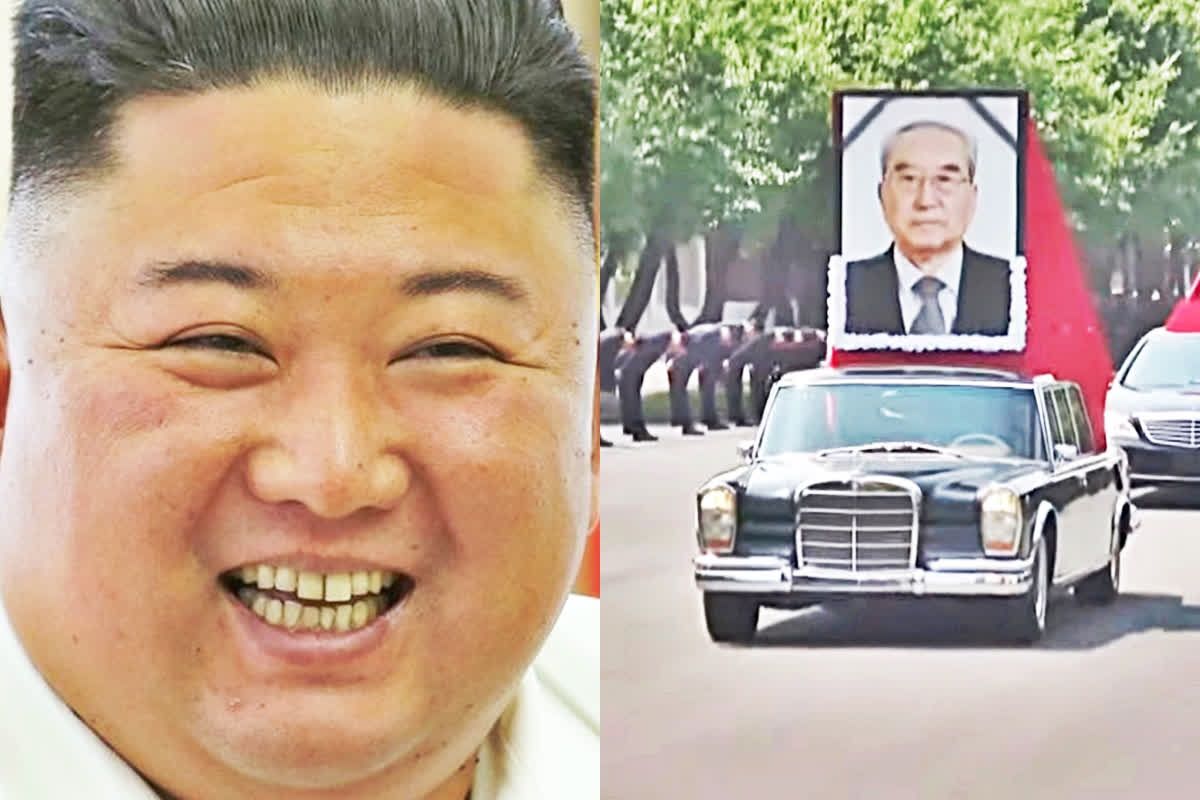
The Democratic People’s Republic of Korea (DPRK) recently held a stately funeral in honor of their former Labor Party Secretary, Kim Ki Nam, who passed away at 94. Having been a key figure in disseminating the regime’s propaganda from the time of Kim Il Sung, through the leadership of Kim Jong Il, and into the era of the current leader, Kim Jong Un, Kim Ki Nam’s death was marked by significant ceremonial gestures, including mobilization of citizens and a procession that even Kim Jong Un joined on foot.
One notable feature of the funeral was the use of a classic Mercedes-Benz car that once represented the pinnacle of luxury and statecraft. Buried below the weight of state rituals and mourning was an equally symbolic statement made through the choice of a vehicle: a Mercedes-Benz 600 from the first generation that started production in 1963. This car, associated with the elite and heads of state, functioned as a hearse, carrying on its roof a portrait of the deceased Kim Ki Nam.
Spotlight on the Legendary Mercedes 600 at North Korean Funeral
The funeral procession displayed a vintage Mercedes-Benz 600, also known as the Grand Mercedes. The Mercedes 600 line, which includes the sedan, limousine, Landaulet, and coupe body styles, was represented at the funeral by a 4-door Landaulet. The particular model has not been produced since 1981, yet its imposing presence and usage in North Korea highlight its long-standing symbolic status.
The Mercedes-Benz 600 Landaulet’s spacious interior and length of over 6 meters make it an ideal choice for ceremonial use. It notably offers a glimpse into the hidden luxury that pervades North Korean leadership circles, in stark contrast to the typical images of the nation’s austerity.
Performance Unmatched by the Mercedes 600’s V8 Engine
Underneath the hood, the Grand Mercedes boasted a V8 naturally aspirated gasoline engine capable of producing a maximum output of 250 horsepower and maximum torque of 51kgf.m. This engine allowed the vehicle, despite its grandeur, to accelerate from 0 to 62 mph in a mere 9.7 seconds, with a top speed of 200 km/h.
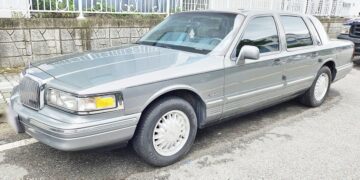
The use of opulent and classic automobiles in funerals of high-ranking North Korean officials isn’t a standalone case. Such occurrences, including the use of a Lincoln Continental during Kim Jong Il’s funeral, serve both ceremonial and political purposes within North Korean society.
North Korean Leadership’s Fascination with Luxury Imports Including Maybach
Beyond the Mercedes-Benz legacy, several other imported luxury vehicles, like Lexus, Nissan, and Mitsubishi, have been spotted in North Korea. Kim Jong Un himself has shown a preference for high-end models such as Maybach, where he was frequently seen riding Maybach 62S and S600 Pullman Guard models, besides the recent addition to the fleet—the Maybach GLS 600 SUV.
[ad_2]
Frequently Asked Questions (FAQs)
- What was the purpose of using a classic Mercedes-Benz at Kim Ki Nam’s funeral?
- Why are luxury imported cars ironic in North Korea?
- What are some other luxury car brands spotted in North Korea?
The purpose was dual: to maintain the tradition of using luxury state vehicles for funerals of important figures, and to demonstrate the regime’s access to luxury despite its often publicized stance against Western influence.
This is because North Korea is known for its isolationist policies and propaganda against Western and American cultures, yet the use of Western luxury cars shows a contradictory practice within the elite ranks.
Other luxury brands include Lexus, Nissan, Mitsubishi, and particularly Maybach, which Kim Jong Un has shown a preference for.
Conclusion
The grandeur funeral of Kim Ki Nam highlighted the level of luxury familiar to North Korean elites. With details such as the use of a first-generation Mercedes-Benz 600 Landaulet extending back to 1963, it’s clear that North Korea, while often presenting an image of self-reliance and austerity, also harbors a taste for historical and extravagant expressions of power and state ritual. This practice reveals a layer of complexity regarding the DPRK’s leadership and their selective embrace of foreign luxury, despite their broader ideological narratives.