

































Elon Musk has announced that the initial human recipient of a Neuralink brain chip is now able to control a computer mouse solely through thought. The trailblazing entrepreneur, who established Neuralink in 2016, reported the individual’s full recovery and the company’s ongoing efforts to maximize mouse button clicks.
“The patient’s progress is encouraging. There appear to be no adverse effects, and they are now able to navigate a computer mouse cursor just by concentrating,” Musk commented while speaking at a live audio event on Spaces.
After receiving the green light to begin human trials in September, the brain chip was successfully implanted last month.
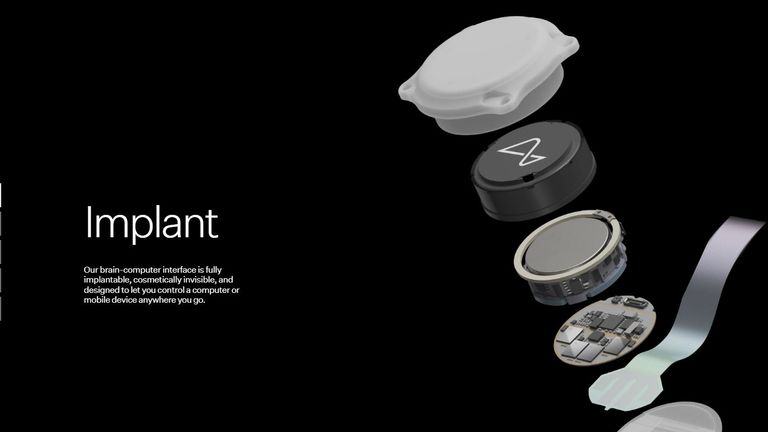
The first human patient received the implant last month. Pic: Neuralink
Musk has previously mentioned that the ultimate goal of the brain chip includes aiding individuals with severe disabilities, such as Stephen Hawking, to “communicate faster than an auctioneer”. He has also suggested that the technology could potentially address issues like obesity, autism, depression, and schizophrenia.
The technique involves utilizing a robot to place a brain-computer interface (BCI) implant within the area of the brain responsible for the intention of movement.
Despite these advancements, Neuralink has faced significant scrutiny over the safety and ethical aspects of its operations. The company has been penalized for breaching US Department of Transportation standards for the transportation of hazardous substances and has attracted political attention over concerns regarding the wellbeing of animal subjects in its experiments. Musk has defended the company, declaring that no deaths of monkeys have occurred due to their Neuralink implants and emphasized a preference for “terminal” monkeys to reduce risks to healthy ones.
FAQ
- What is Neuralink?
Neuralink is a company co-founded by Elon Musk that develops brain-computer interface (BCI) technologies with the goal of helping individuals with severe disabilities and potentially treating a range of conditions. - Can the Neuralink brain chip really let a person control a mouse with just their thoughts?
According to Elon Musk, the first human patient with a Neuralink brain chip is able to control a computer mouse cursor with their mind. - What are the safety concerns associated with Neuralink?
There have been concerns and scrutiny regarding animal welfare in the testing phase, as well as issues with the transportation of hazardous materials, for which the company has faced penalties. - Has Neuralink implanted chips in animals?
Yes, Neuralink has conducted experiments on animals, such as monkeys, and Musk has stated that no monkey has died as a direct result of the Neuralink implant.
Conclusion
The advent of brain-computer interfaces like Neuralink’s brain chip is a significant stride towards intertwining human cognition with technology. The ability for a human to control a computer mouse via thought alone not only showcases the potential of this technology but also offers a glimmer of hope in enhancing the quality of life for individuals with severe physical limitations. While the technological advancements in BCI are undeniably groundbreaking, Neuralink’s journey is also paving the way for discussions on the ethical and safety implications associated with such invasive biotechnologies. As Neuralink continues to develop and test its innovative solutions, it is essential to balance the boundary-pushing science with careful consideration of its impact on both humans and animals.
[ad_2]