






























By Kevin J. Jones
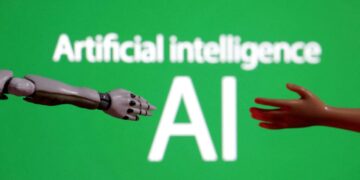
In a digital age where artificial intelligence (AI) is becoming increasingly sophisticated, the Roman Catholic Church is stepping forward to voice its insights into the moral implications of AI. As society grapples with the advancements and challenges presented by AI technology, Catholic social teaching—rooted in centuries of philosophical and theological thought—offers significant contributions to the discussion of AI ethics.
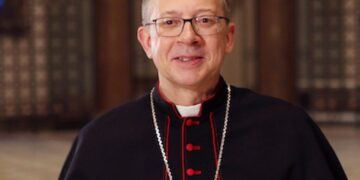
An unsettling aspect of AI’s evolution is the creation of “deepfakes,” as highlighted by the fraudulent online advertisement featuring Mexico City’s Archbishop Cardinal Carlos Aguiar Retes promoting a non-existent miracle drug. These AI-generated fabrications present an urgent call for robust ethical frameworks that can address such abuses of technology.
Amidst increasing concern, the Vatican has prioritized the ethical examination of AI, bringing together industry experts, philosophers, and theologians. Contributing to this effort is the Vatican’s Dicastery for Culture and Education and its Center for Digital Culture, which together foster dialogue around AI’s moral and ethical dimensions.
The Opportunities and Risks of AI’s Rapid Advancements
While AI presents risks, including the potential for workforce disruption and ethical quandaries, it also provides benefits like assisting in language translation for under-resourced communities and expediting scientific progress in fields such as medical research.
For instance, Alphabet’s DeepMind AI project, AlphaFold, has made impressive strides in predicting protein structures, which can have significant impacts on health and sustainability.
Nonetheless, the Catholic tradition provides a rich framework to engage with the questions brought forth by AI. For centuries, Catholic social teaching has responded to societal shifts brought on by technological change, and today’s AI revolution is no exception.
AI Ethics Through Catholic Social Teaching Lens
The Catholic Church has a longstanding tradition of addressing the implications of technological advancements on society, dating back to the industrial revolution. This heritage gives the Church a platform to engage in the discourse surrounding AI and underline the significance of upholding human dignity, advocating for the common good, and promoting human flourishing.
According to AI experts and theologians, AI has the potential to amplify social inequalities and marginalize vulnerable populations. Catholic social teaching, therefore, can serve as a guide towards developing AI that aligns with ethical principles and human values.
The Church’s Role in Shaping AI’s Future Trajectory
The Vatican’s involvement, including contributions from Pope Francis himself, emphasizes the necessity for international cooperation in establishing standards and regulations for AI technology. As the Rome Call for AI Ethics denotes, values such as inclusivity, security, and privacy must be at the forefront of AI development.
The Church encourages a thoughtful and interdisciplinary approach to understanding AI, with an emphasis on patience and an avoidance of being swayed by overhyped narratives. This allows for a measured application of enduring Catholic principles to modern-day technological concerns.
Kevin J. Jones pens for OSV News from Denver.
Frequently Asked Questions (FAQ)
- What is the Catholic Church’s stance on AI?
The Church looks to Catholic social teaching, which advocates for ethical principles that promote human dignity, the common good, and human flourishing, to frame its response to AI. The Church also calls for international regulation and ethical standards surrounding AI technology. - What is the “Rome Call for AI Ethics”?
It is a set of guidelines for AI ethics, emphasizing inclusivity, security, and privacy, signed by the Vatican’s Pontifical Academy for Life and leaders from IBM and Microsoft in 2020. - Why is Catholic social teaching relevant to the discussion on AI?
Catholic social teaching is a response to societal changes brought about by technological advancement, and AI poses new challenges that require a re-application of these timeless ethical teachings. - How does AI align with or contradict Catholic values?
AI technologies align with Catholic values when promoting the common good and protecting human dignity. However, when AI exacerbates inequalities, invades privacy, or neglects moral accountability, it contradicts Catholic ethical principles.
Conclusion
In the face of AI’s rapid development and integration into society, Catholic social teaching emerges as a pertinent and robust framework for exploring the ethical dimensions of artificial intelligence. The Roman Catholic Church’s efforts in fostering dialogue and establishing ethical guidelines aim to ensure that AI advances are in service of humanity and reflect core values of the Catholic tradition. As AI continues to evolve, the Church’s contributions to the conversation will be crucial in navigating the complex moral landscape of our increasingly digital world.