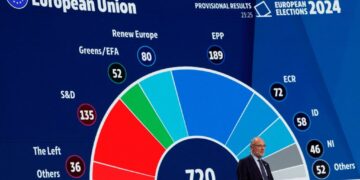






























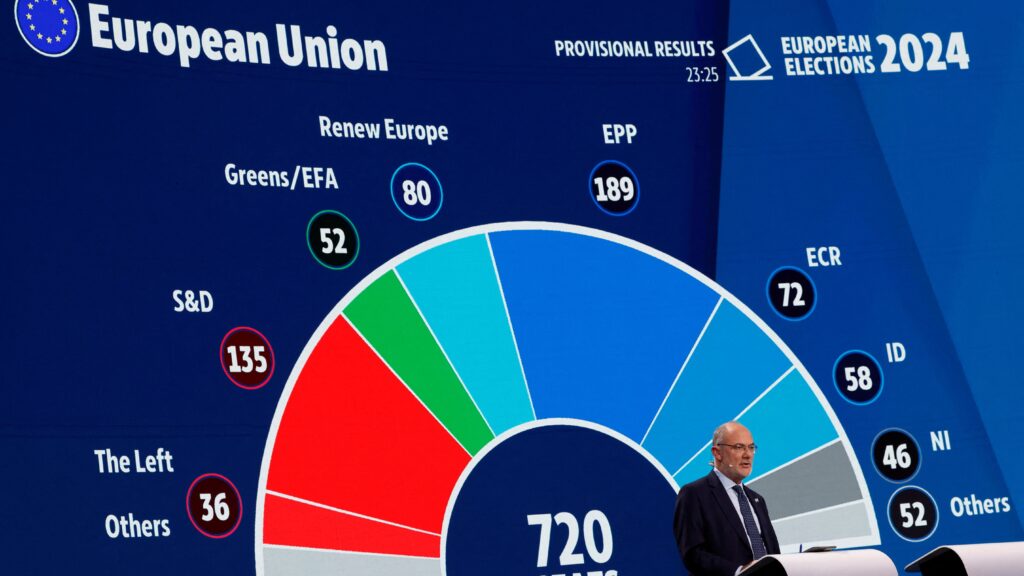
(OSV News) — The results of the recent European Parliament elections have prompted concern from Catholic Church leaders about the dwindling sentiment for European unity and the surge in nationalist party support.
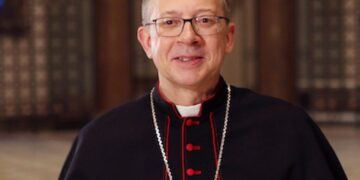
Archbishop Gintaras Grušas, head of the Council of Catholic Episcopates of Europe (CCEE), expressed worry regarding the populace’s diminishing faith in the European Union’s decisions. He emphasized the need for a focus on specific areas such as fundamental rights, the dignity of the individual, family matters, education, and peace. The Archbishop looks forward to centrist parties, who still hold a majority, to address these core concerns that resonate with the everyday citizen.
The reaction from the Archbishop of Vilnius, Lithuania, followed the conclusion of the elections held from June 6-9, signifying the first voting event post Britain’s 2020 departure from the EU.
In his discussion with OSV News, Archbishop Grušas mentioned that interference from EU institutions in matters typically governed by individual member states had aggravated the people, creating a counter-response. His expectation is that the parliament’s new members will prioritize universally significant values.
Simultaneously, a Catholic Bishop in Belgium highlighted the immense challenge that public dissatisfaction now represents for the EU. He also noted the minimal influence the church had in swaying the electorate in Belgium.
Bishop Jean Kockerols from the Mechelen-Brussels Archdiocese expressed his concerns regarding the popularity of extremist factions, emphasizing that they do not provide viable solutions. He pointed out the victory of nationalist parties like the New Flemish Alliance and Flemish Interest in Belgium, and how EU officials have failed to effectively communicate the benefits of being part of a larger European entity.
The election brought nationalist and right-wing party gains within several nations, including Austria, Germany, Greece, Italy, the Netherlands, and Spain. Yet, while some countries saw high voter turnouts, notably those where it is compulsory, other countries like Croatia and Lithuania saw a decline.
Following the elections, the President of the European Commission, Ursula von Der Leyen, announced her intentions for a coalition with liberal and social democratic parties. However, the increase in nationalist representation in Parliament may pose challenges regarding policies on migration and climate change.
Recent voting in France led President Emmanuel Macron to call for quick parliamentary elections after the defeat of his centrist alliance to Marine Le Pen’s National Rally. In Germany, the support for right-wing populist groups triggered concerns over the fragility of democracy.
Auxiliary Bishop Léon Wagener of Luxembourg expressed relief that the elections didn’t shift excessively right, yet was unsettled by the strong nationalist sentiments among younger voters. He highlighted the growing unease among young individuals concerning their futures and the apparent neglect of decision-makers to improve the situation.
COMECE, an institution where the three bishops serve, recently released a joint declaration alongside Protestant and Orthodox churches that discussed the marginalization of European Christians. The declaration also referenced the omission of Christian values from EU texts, suggesting a potential oversight of Christian tradition.
Although the church’s influence appeared limited during pre-election debates, Bishop Wagener emphasized the church’s role in monitoring political developments and defending human dignity against populism. He called for the church to voice concerns and drive meaningful change, particularly in areas concerning family values and asylum procedures.
Article by Jonathan Luxmoore for OSV News.
FAQs about Catholic Church’s Reaction to EU Election Results
- What concerns did Catholic Church leaders have about the EU election results?
- Catholic Church leaders are concerned about the decrease in enthusiasm for European unity and the increased support for nationalist parties.
- What do church leaders hope for from centrist parties?
- They hope centrist parties will address people’s concerns about fundamental rights, human dignity, family, education, and peace.
- Why did some people vote for nationalist parties according to Church leaders?
- Church leaders believe that the EU’s failure to allocate sufficient resources to express the benefits of EU membership has led to public dissatisfaction and a turn towards nationalist parties.
- What was the turnout like for the elections?
- The voter turnout was varied, with high participation in countries where voting is mandatory, but notably lower in nations like Croatia and Lithuania.
- How did the Church’s influence appear in pre-election debates?
- The Church’s influence was considered very limited, with no mention of the Church’s stance on various issues in pre-election debates.