
































In a powerful reflection shared with the U.S. Catholic bishops, the papal nuncio emphasized the Eucharist as a sacred space where the faithful encounter the triumphant yet wounded Christ, leading to the transformation of the Church.
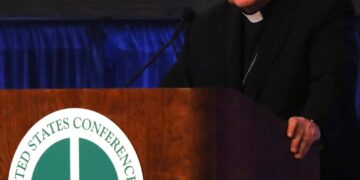
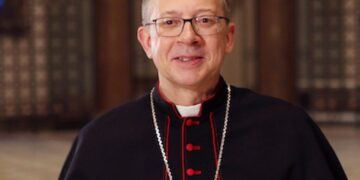
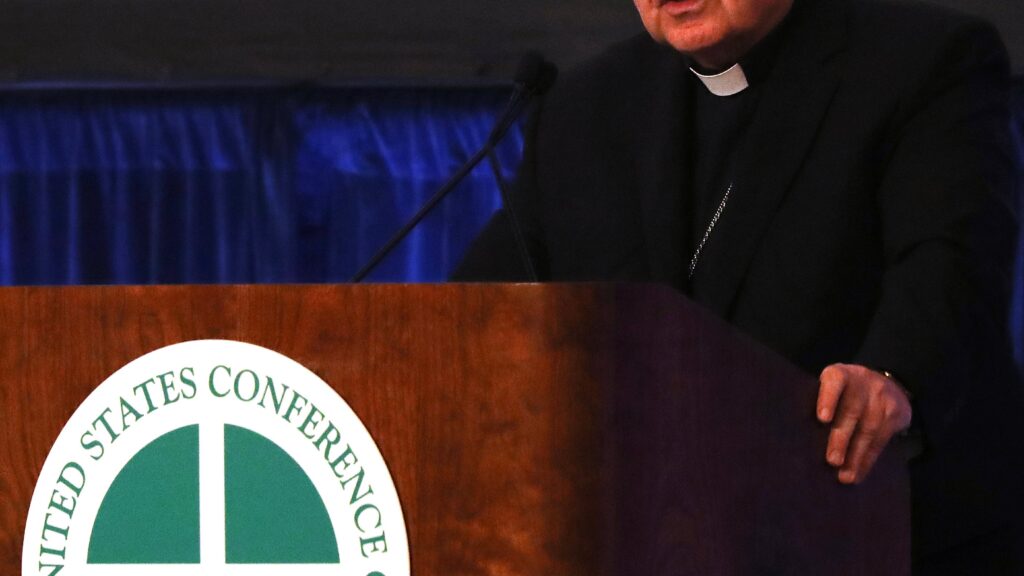
During the Spring Plenary Assembly of the USCCB from June 12-14 in Louisville, which was publicly broadcasted on June 13 and 14 through the USCCB’s website, Cardinal Christophe Pierre addressed the importance of the Eucharist in the ongoing healing and strengthening of the Church.
The Cardinal drew attention to the National Eucharistic Revival’s pilgrimages that will culminate at the National Eucharistic Congress in Indianapolis in July. These processions represent a powerful spiritual journey toward the Eucharistic Lord, fostering community and synodality among the faithful.
Highlighting Christ’s revelation of his wounds to the Apostles after his resurrection, Cardinal Pierre affirmed that the Church, despite its own wounds—including the abuse crisis, indifference to the marginalized, and internal divisions—can find hope and victory in the risen Christ.
Archbishop Timothy P. Broglio, the USCCB president, also emphasized the centrality of the Eucharist in his remarks to the bishops, looking ahead to the National Eucharistic Congress and calling for a reaffirmation of Eucharistic faith amid a range of social and global issues.
Archbishop Broglio acknowledged the difficulties and conflicts the Church faces, from the ongoing struggles in the Middle East to the challenges migrants encounter at the southern U.S. borders. The archbishop highlighted the Church’s efforts to assist and be in solidarity with those in need, urging continued advocacy for peace and dignity for all life.
The assembly included discussions on various topics such as the Synod on Synodality, the National Eucharistic Revival, mental health, migration, and potential canonization causes, with particular attention on Adele Brise, whose Marian visions have been recognized by the Church. Additionally, the bishops evaluated the Catholic Campaign for Human Development (CCHD) and cast votes related to pastoral frameworks and liturgical texts.
Report by Gina Christian, a multimedia reporter for OSV News. You can find her insights on X (formerly known as Twitter) at @GinaJesseReina.
Frequently Asked Questions
- What was the central theme of Cardinal Pierre’s address to the U.S. bishops?
Cardinal Pierre focused on the Eucharist as a critical “place of encounter” where the wounds of the Church can be transformed by the resurrected Christ. - What is the significance of the National Eucharistic Revival’s pilgrimages?
The pilgrimages symbolize a collective spiritual journey towards Christ, promoting community within the Church and reflecting synodal values. - How did Archbishop Broglio tie the Eucharist to current global concerns?
Archbishop Broglio stressed the importance of Eucharistic faith and spoke on various issues, including conflicts in the Middle East and the need to support migrants and uphold human dignity. - What were some key topics at the USCCB Spring Plenary Assembly?
Discussions included the Synod on Synodality, the National Eucharistic Congress, Church’s mental health initiatives, migration, and reviewing pastoral frameworks and liturgical revisions. - What challenges did the bishops discuss regarding the Catholic Campaign for Human Development (CCHD)?
The bishops addressed declining contributions to CCHD, shifts in post-pandemic resource allocation, and ongoing criticisms related to funded projects.