

































Expeditiously Tracing North Korean Artillery Provocations and Long-Range Shells
Pinpointing the Launch Points of Concurrent Artillery Fires
Capable of Missile Detection up to a Distance of 60 Kilometers
![北 포병을 떨게 하는 ‘비밀 병기’는…장사정포 무력화 하는 ‘대포병 레이더’[이현호 기자의 밀리터리!톡]](https://contents-cdn.viewus.co.kr/image/2024/02/CP-2023-0094/image-59e50e94-03c2-4161-8124-305e655d14d5.jpeg)
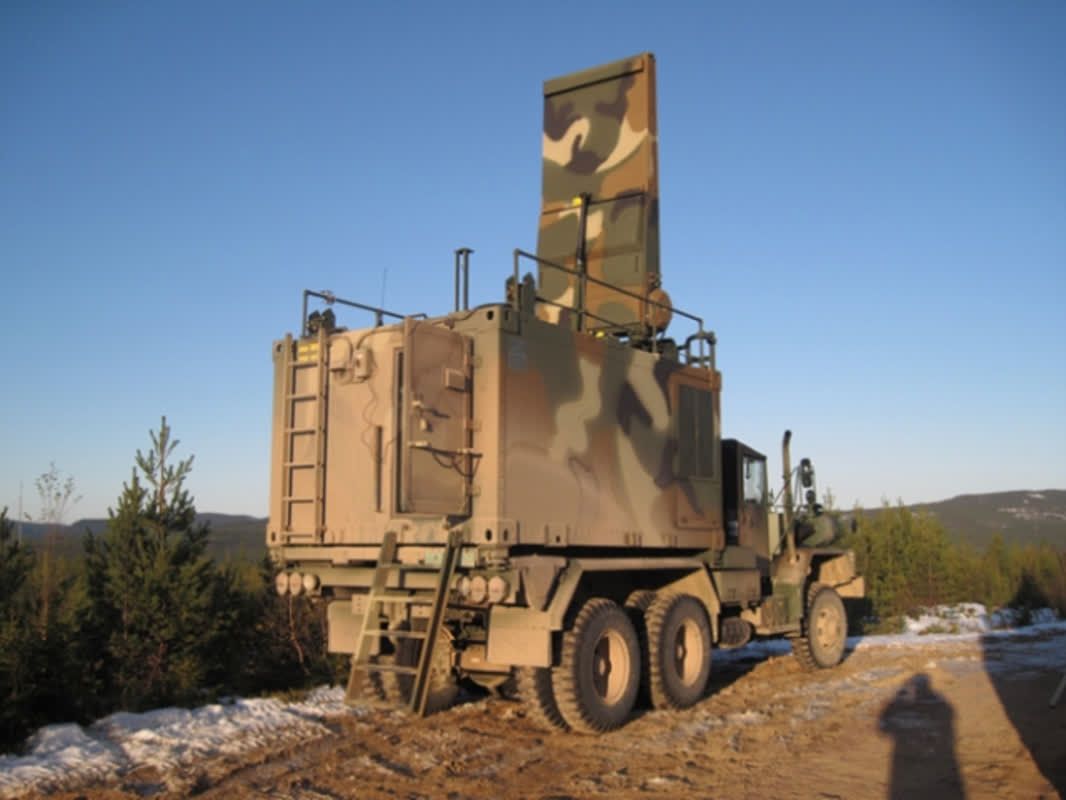
In the event of artillery fire provocations by North Korea, the pivotal assets enabling South Korea’s military to trace the origin in real-time are the counter-battery radar systems. Such advanced equipment is standard among nations with structured artillery, as it permits the calculation of the firing point by analyzing the ballistic trajectory of hostile artillery.
The South Korean Army has fortified its real-time counter-fire capabilities with two primary types of counter-battery radars: the “AN/TPQ-36·37” and the “ARTHUR,” with the domestically developed “AN/TPQ-74K Cheon Gyeong” as an additional asset. “Cheon Gyeong,” part of the “Active Electronically Scanned Array (AESA)” suite, boasts a remarkable 18-hour operating time and a detection radius exceeding 37.3 miles.
AN/TPQ-37 Renders Shells and Rockets Above 31 Miles Detectable
Lockheed Martin’s AN/TPQ-36 has the aptitude to detect artillery at 15.5 miles, whereas the larger AN/TPQ-37 extends this capacity to about 31 miles, identifying rockets and missiles. These systems are crucial in locating the source of North Korean artillery, facilitating effective counterresponses.
The AN/TPQ-53 is a newer model comprising two 5-ton trucks, capable of a 360-degree operational angle. This system is not only adept in tracking traditional artillery but also in identifying and monitoring drones, crucial to modern battlefield reconnaissance and combat.
ARTHUR Tracks Over 100 Targets Within 37.3 Miles
Introduced in 2006, the ARTHUR counter-battery radar was selected for its cost-efficiency and compatible performance with existing military radars. Mountable on a tracked multi-purpose vehicle, ARTHUR can handle electronic warfare countermeasures and can detect over 100 targets per minute.
AN/TPQ-74K Doubles Detection Range and Operational Scope
The Cheon Gyeong features an improved detection range and can remain operational for an extended period compared to ARTHUR-K, thanks to the implementation of gallium nitride (GaN) components. This hike in efficiency and simultaneous target handling capacity enables rapid response to enemy fire.
FAQ Section
- What is a counter-battery radar?
- What makes the AN/TPQ-74K Cheon Gyeong distinctive?
- How does South Korea’s counter-battery radar compare to other systems worldwide?
- Can these radar systems detect drones?
- Are these radars operational in adverse weather conditions?
A counter-battery radar is a type of radar system designed to locate the source of enemy artillery fire by tracking the trajectory of incoming projectiles.
The AN/TPQ-74K Cheon Gyeong utilizes Active Electronically Scanned Array (AESA) radar technology and GaN components, enhancing its detection range and continuous operational capacity significantly.
South Korea’s counter-battery radars like the AN/TPQ-36·37, ARTHUR, and AN/TPQ-74K Cheon Gyeong feature advanced detection capabilities, robust continuous operating times, and the ability to withstand electronic warfare tactics, making them some of the most efficient in the world.
Yes, the AN/TPQ-53, a newer model of the radar system, has the capability to detect, track, and identify drones, which behave differently from traditional projectiles.
Yes, radars such as the AN/TPQ-74K Cheon Gyeong are designed to operate effectively regardless of weather conditions.
Conclusion
South Korea’s advanced counter-battery radar systems exemplify cutting-edge military technology tailored to safeguard against potential North Korean provocations. Featuring real-time detection, robust operation under various conditions, and the ability to track numerous targets, these radars are crucial components in South Korea’s defense infrastructure. Their continuous development and refinement underscore the dedication to maintaining a vigilant and responsive military force capable of swiftly countering artillery threats.