
































[ad_1]
In light of the recent Francis Scott Key Bridge collapse, officials have swiftly initiated cleanup measures, including the deployment of protective water barriers and rigorous testing for potential contaminants. The incident’s environmental ramifications are under close observation, particularly considering the Patapsco River’s ecological significance for both local biodiversity and commercial navigation.
The Unified Command, composed of state entities and the Coast Guard, announced on Thursday that they have implemented 2,400 feet (732 meters) of absorbent barriers, complemented by an equivalent length of containment booms, to safeguard against the dispersion of pollutants.
Environmental specialists are intently tracking developments due to the variety of risks associated with urban waterways, the site’s significance to diverse aquatic species, and its role along migratory bird routes during this seasonal transition.
“When an event of this magnitude occurs, the threat of waterborne hazardous materials is a pressing concern. The key question is the scale of potential contamination,” noted Gary Belan from American Rivers, an organization dedicated to river conservation nationwide.
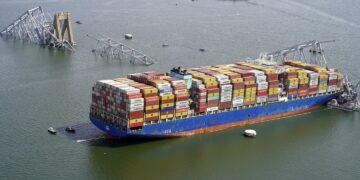
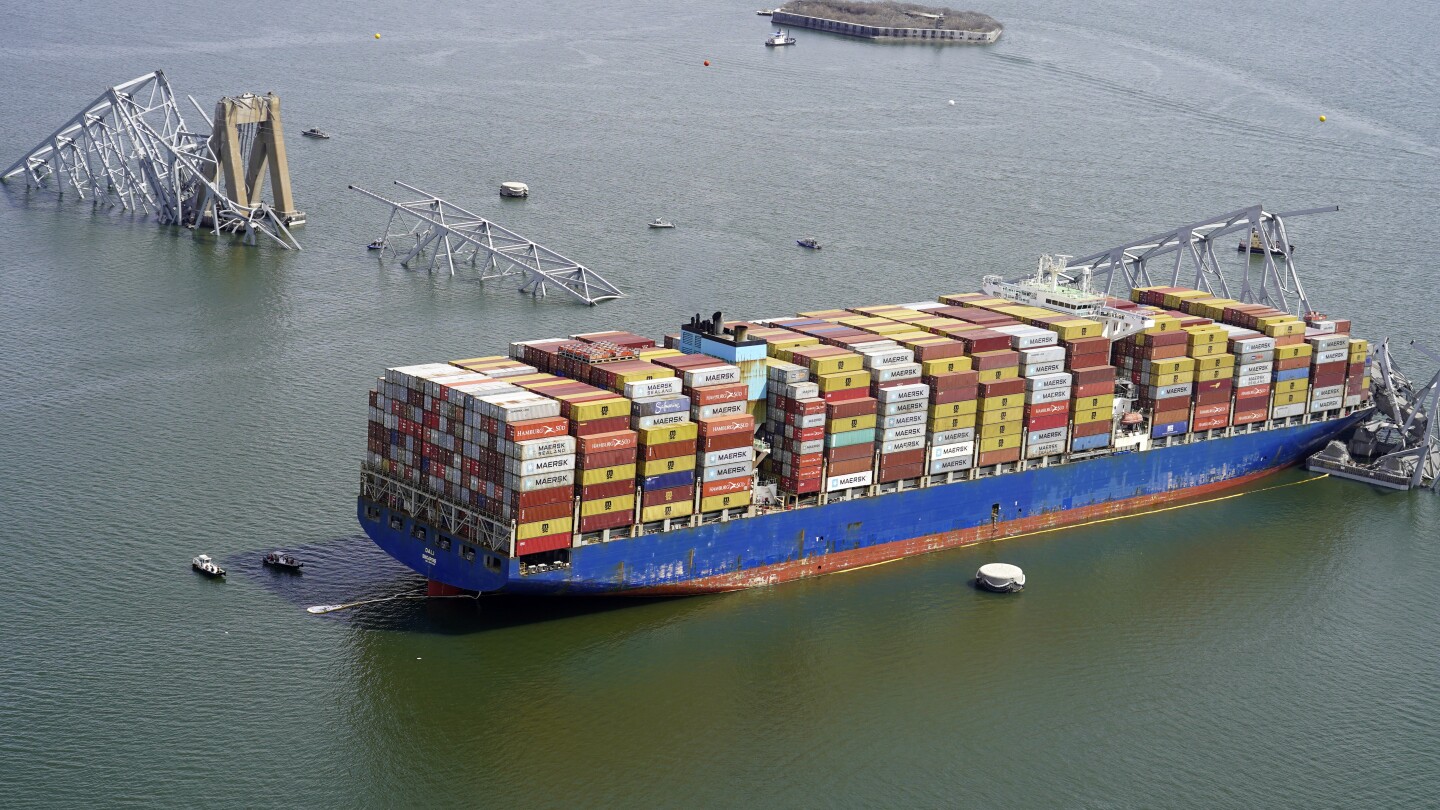
An environmental crisis could originate from either construction materials in the river or the cargoes of the Dali vessel, with particular dread regarding a breach in the ship’s fuel tanks.
“Such an event would precipitate grave ecological repercussions, especially for the adjacent regions of the Chesapeake Bay,” Belan explained.
A filmy sheen detected on the water’s surface near the destruction has been acknowledged by the Unified Command, declaring an absence of immediate environmental peril.
Of the 56 containers holding hazardous substances aboard the ship, 14 were ruined, including those with perfumes, soaps, and unspecified resin, though it remains uncertain whether any contents have infiltrated the river.
According to Unified Command, air quality assessments around the affected area have not identified volatile organic compounds or combustible gases.
With direct involvement in the emergency response, the Maryland Department of the Environment has initiated water sampling in the vicinity and aims to address any ecologically adverse consequences that may arise, Jay Apperson, a spokesperson for the department, reported.
Noting the necessity of stringent oversight, Emily Ranson from Clean Water Action highlighted the essential role of federal regulation due to the port’s interstate commerce activities. She presses the importance of maintaining appropriate safeguards for maritime operations.
The catastrophic incident transpired in the early hours of Tuesday, with the powerless Dali vessel striking a bridge support and subsequently causing the structure’s collapse. This accident has effectively severed access to a major American port and is feared to have resulted in the loss of six construction workers who were present on the bridge, with two individuals successfully rescued from the wreckage.
[ad_2]
FAQ
What caused the Francis Scott Key Bridge collapse?
The collapse was caused by the cargo ship Dali, which had lost power and crashed into a pillar supporting the bridge.
Have there been any casualties reported?
As of the latest reports, six construction workers are presumed dead following the collapse, while two people were rescued from the site.
Are there any immediate environmental threats due to the collapse?
Although a sheen has been observed in the water, the Unified Command has indicated that there is currently no immediate threat to the environment.
What measures are being taken to protect the environment?
Protective barriers and absorbent devices totaling nearly a mile have been deployed to contain any potential hazardous spills, and water samples are being tested for contamination.
Who is involved in the cleanup operations?
The cleanup is overseen by the Unified Command, which includes state agencies and the Coast Guard, alongside the Maryland Department of the Environment.
Conclusion
The unexpected collapse of the Francis Scott Key Bridge has not only disrupted commercial activity at a major U.S. port but also raised concern over the potential environmental impact on the Patapsco River and the wider Chesapeake Bay area. Prompt action and coordinated efforts by various agencies highlight the gravity of the situation as they work to prevent an ecological disaster. Continued monitoring and swift containment strategies will be critical in managing the aftermath of this unfortunate event.