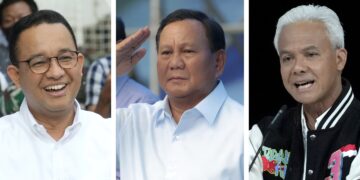

































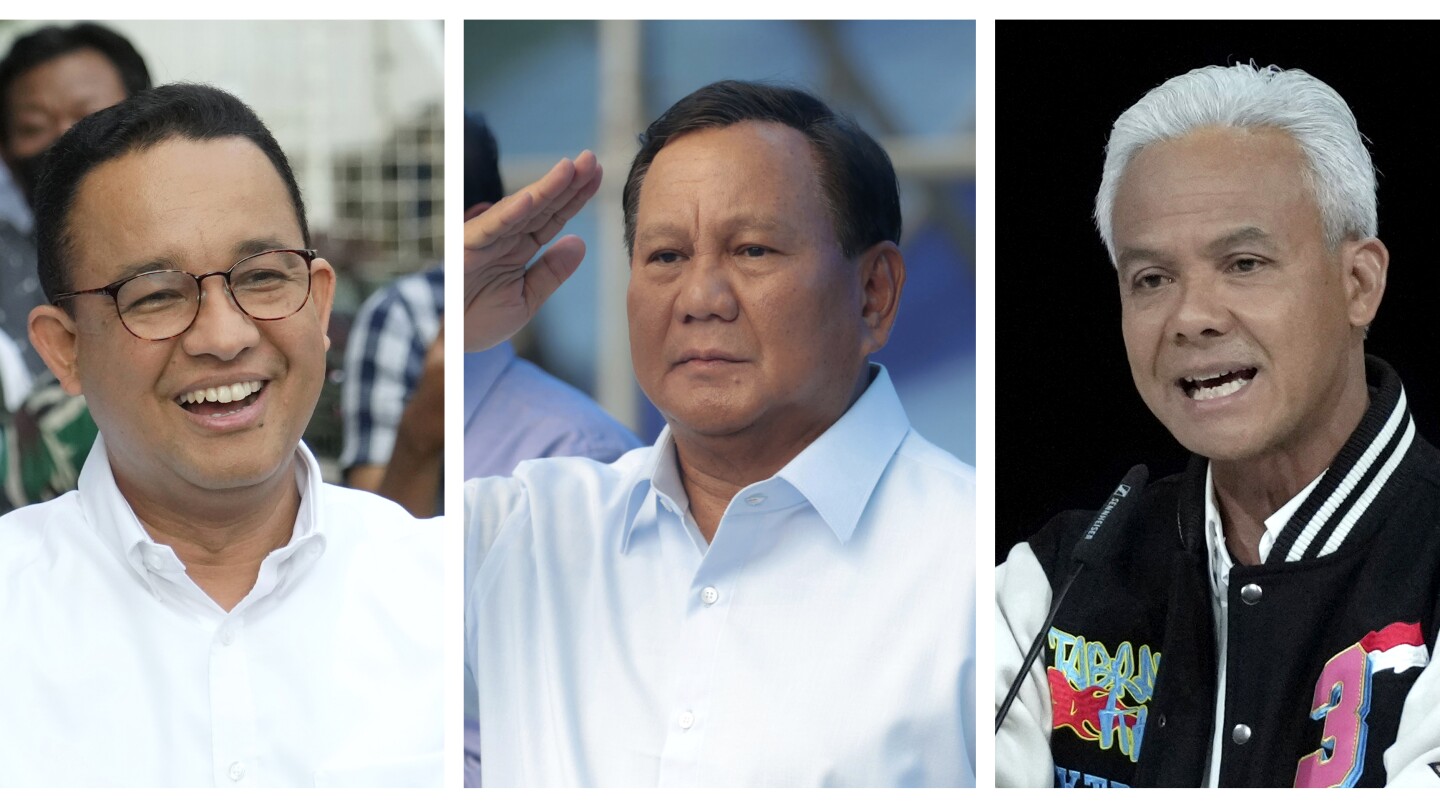
As Indonesia gears up for its incoming presidential elections, citizens prepare to vote for a new leader to succeed the term-limited President Joko Widodo. The anticipation builds as the three-way contest unveils itself among Defense Minister Prabowo Subianto and ex-governors Anies Baswedan and Ganjar Pranowo.
Subianto leads the race and has aligned himself with Widodo’s lineage by choosing the president’s son, Gibran Rakabuming Raka, as his vice-presidential partner.
An electorate base of about 205 million Indonesians is set to cast their votes, marking significant participation in one of the world’s most extensive democracies and the largest with an Islamic majority.
Here’s a closer look at the presidential candidates and their respective vice-presidential hopefuls.
PRABOWO SUBIANTO
Defense Minister Prabowo Subianto is no stranger to controversy, bearing connections to the authoritarian rule of Suharto. A former lieutenant general and a key figure in the notorious Kopassus special forces, Subianto faced dishonorable discharge for the abduction and torment of activists in 1998—a time when Suharto was his father-in-law. Despite this, Subianto never stood trial for these events.
Post-exile, Subianto established the Gerindra Party in 2008. His previous presidential attempts were unsuccessful against the incumbent Joko Widodo. Nonetheless, he may have gathered enough support to circumvent a runoff in this election, though this remains uncertain.
The Widodo-Subianto saga crosses family lines, with Subianto selecting the current president’s son as his running mate, sparking legal debates due to Raka’s age.
Despite his questionable past with human rights, Subianto has promised to follow through Widodo’s economic initiatives, possibly leveraging the president’s ongoing favor among the populace.
GANJAR PRANOWO
Ganjar Pranowo stands as the official choice of the ruling political faction; however, this candidacy faces the peculiar backdrop of President Widodo’s absence of explicit support, with some suspecting the president’s tacit favoritism towards Subianto and Raka.
As the former governor of Central Java, Pranowo’s governance is remembered for controversial decisions tied to international sports and diplomatic relations. His political mantra pushes for a blend of continuation and reform within the reigning government’s framework.
His pair-up with Mohammad Mahfud brings a potent combination of security, legal and constitutional expertise to their campaign platform.
ANIES BASWEDAN
Anies Baswedan’s tenure as Jakarta’s governor came on the back of one of the more divisive electoral campaigns in the nation’s history, compounded by religious tension and social discord. Prior to his governance role, he had served as a minister within President Widodo’s cabinet, only to be dismissed in 2016.
Baswedan’s running mate, Muhaimin Iskandar, holds connections with the country’s largest Islamic group, potentially solidifying their conservative support base. Baswedan opposes the current capital relocation project and laments what he perceives as a regression in Indonesia’s democratic principles, promising a restoration of its integrity.
FAQ About Indonesia’s Presidential Election
- When will the Indonesian presidential elections take place?
Indonesians are set to vote for their new president on Wednesday, following Joko Widodo’s term conclusion. - How many times has Prabowo Subianto run for president?
Prabowo Subianto has run for the presidency twice before, marking this as his third attempt. - What opposition does Ganjar Pranowo face regarding his candidacy?
Pranowo’s candidacy is peculiar as it lacks explicit support from the incumbent President Widodo, who is believed to lean towards Subianto and Raka instead. - What controversial decision is Ganjar Pranowo known for during his governorship?
As governor, Pranowo refused Israel’s participation in the Under-20 FIFA World Cup leading to Indonesia being dropped as the host, which caused backlash from soccer enthusiasts. - What are the concerns raised by Anies Baswedan regarding Indonesia’s democracy?
Baswedan has critiqued the alignment of Prabowo Subianto with the current president’s son, suggesting it undermines the democratic process.
Conclusion
The presidential race in Indonesia presents a stark choice between past and present, continuity and change. With three formidable candidates, each carrying distinct legacies and visions for the future, the election stands as a pivotal moment for the Indonesian democratic journey. As the citizens of Indonesia prepare to vote, the global community watches with interest to see which path the nation will chart under its next leadership at this critical juncture of its political, social, and economic life.