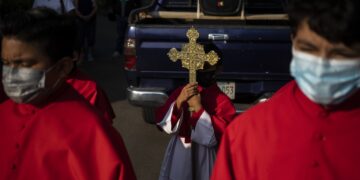




























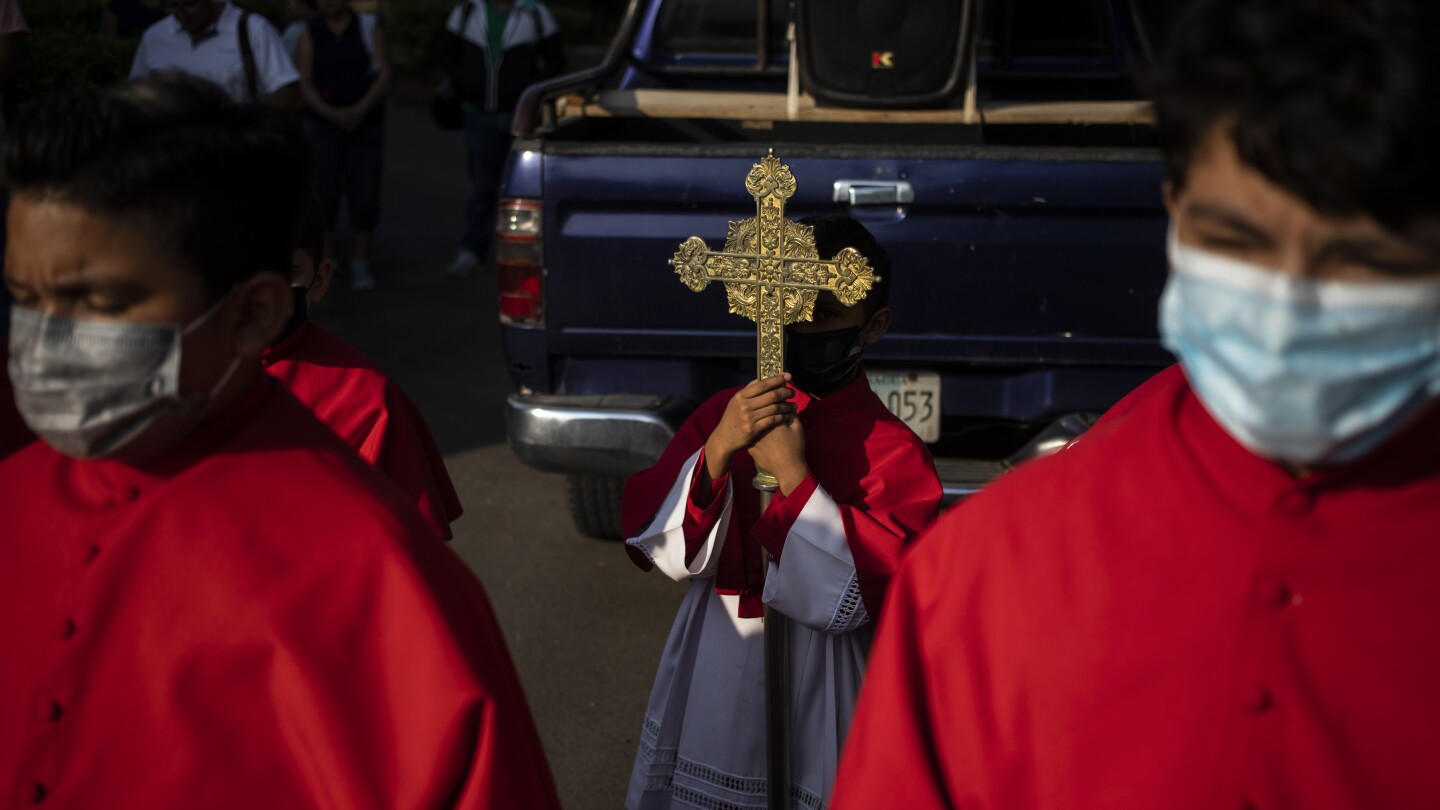
MIAMI (AP) — As Nicaragua’s government intensifies its repressive measures against the Catholic Church, a palpable sense of dread is taking hold among the country’s congregants, whether they are in Nicaragua or have fled abroad. In 2024, the increasing oppression involves the expulsion of nineteen priests from the nation, countless occurrences of intimidation, church desecrations, and a lack of worship and social services, especially in rural territories. These concerning developments have been documented by exiled clergy, Nicaraguan laypeople, and human rights activists.
President Daniel Ortega’s stringent policies, notably targeting the Catholic Church but also affecting evangelicals, are fostering an environment where people are afraid to vocalize their criticisms or even reference the institutional aggression they face.
Martha Patricia Molina, a Nicaraguan lawyer who sought refuge in the United States, conveys the increasing intensity of the repression. “The silence becomes more profound with time,” she says. Molina’s efforts to track several instances of persecution against the church earned her an International Religious Freedom Award from the U.S. State Department.
For many priests, reporting instances of persecution poses a dangerous risk, as doing so may invite further retaliation. “The only options left are the cemetery, prison, or exile,” remarked Molina.
After documenting 30 church desecrations within a year, Molina illustrates the perilous situation for the clergy, including an instance where a priest became a suspect in an investigation of a theft at his own church after reporting the incident to the police.
Life under Ortega’s surveillance is equated to hell by some, with dissenting government stances carrying severe consequences. An exiled priest expounds on the trepidation permeating through the public: “If they do this to the priests, what will they do to us?” Their reluctance is grounded in historical context; in 2018, the brutal repression of public protests by the Nicaraguan government against proposed welfare reforms left many casualties. This series of events ignited an increase in systematic targeting of the church.
Daniel Ortega and his wife, Vice President Rosario Murillo, accuse church members of acting as “terrorists” conspiring against their rule. However, human rights entities perceive it as an attempt by the government to suppress the church due to its unwavering resolve to oppose state violence.
The repercussions of the Nicaraguan government’s censorious acts are spread wide-reaching, affecting not only religious figures but also students, marginalized communities, and small businesses dependent on religious events for their livelihood. The situation has been exacerbated by the closure of more than 3,000 NGOs, including educational institutes and charity organizations, further crippling social services and religious liberties.
In defiance of the growing tensions, the faithful continue to visit the churches, clinging to hope that seminary students may replace the clergy forced into exile. Efforts from the Vatican, largely quiet to the public, were followed by the release and exile of several religious figures in recent negotiations, stimulating mixed reactions from those advocating for the Nicaraguan church’s freedom.
Even amid negotiations leading to the release and expulsion of imprisoned figures, many insist exile should not become normalized. Calls for greater dissent from international authorities persist from exiles and activists.
Nicaraguan laypeople and exiled clergy remain resolute in their stance: they will keep documenting every injustice in hopes of one day seeing it rectified. “The dictatorship will not manage to make the church kneel before them,” expressed Molina with conviction.
Associated Press correspondent Nicole Winfield in Rome contributed to this story. The piece is part of the Associated Press’s religion coverage, receiving support in association with The Conversation US, funded by Lilly Endowment Inc.
FAQ about the situation in Nicaragua
- What has led to the heightened crackdown on the Catholic Church in Nicaragua?
The government’s offensive escalated as a reaction to the church’s support of civic protests in 2018 that opposed President Ortega’s regime, and the clergy’s persistent criticism of the state’s authoritarian measures. - Who has been affected by the Nicaraguan government’s actions?
The repression has targeted Catholic and evangelical clergy, worshipers, students, journalists, humanitarian organizations, small businesses, and minority communities. - What has been the international response to these occurrences?
The U.S. State Department has recognized the efforts to document church persecutions, but calls for a stronger international stance remain from Nicaraguan exiles and human rights advocates. - How has the Vatican responded to the situation?
The Vatican has called for dialogue and facilitated negotiations that have resulted in the release and exile of some religious figures, although there’s been little public commentary.
Conclusion
The plight of the Catholic Church in Nicaragua has unraveled into a profound human rights dilemma. The strategy of inflicting fear through repression and exile stands testament to the lengths an authoritarian government will go to stifle dissent. However, the resolute spirit of Nicaraguans, both in their homeland and abroad, continues to resist these oppressive actions, fostering hope for eventual justice and the restoration of religious and civil liberties in their nation.
[ad_2]