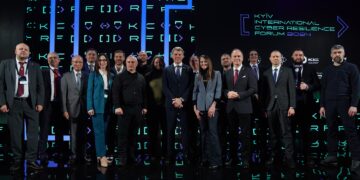

































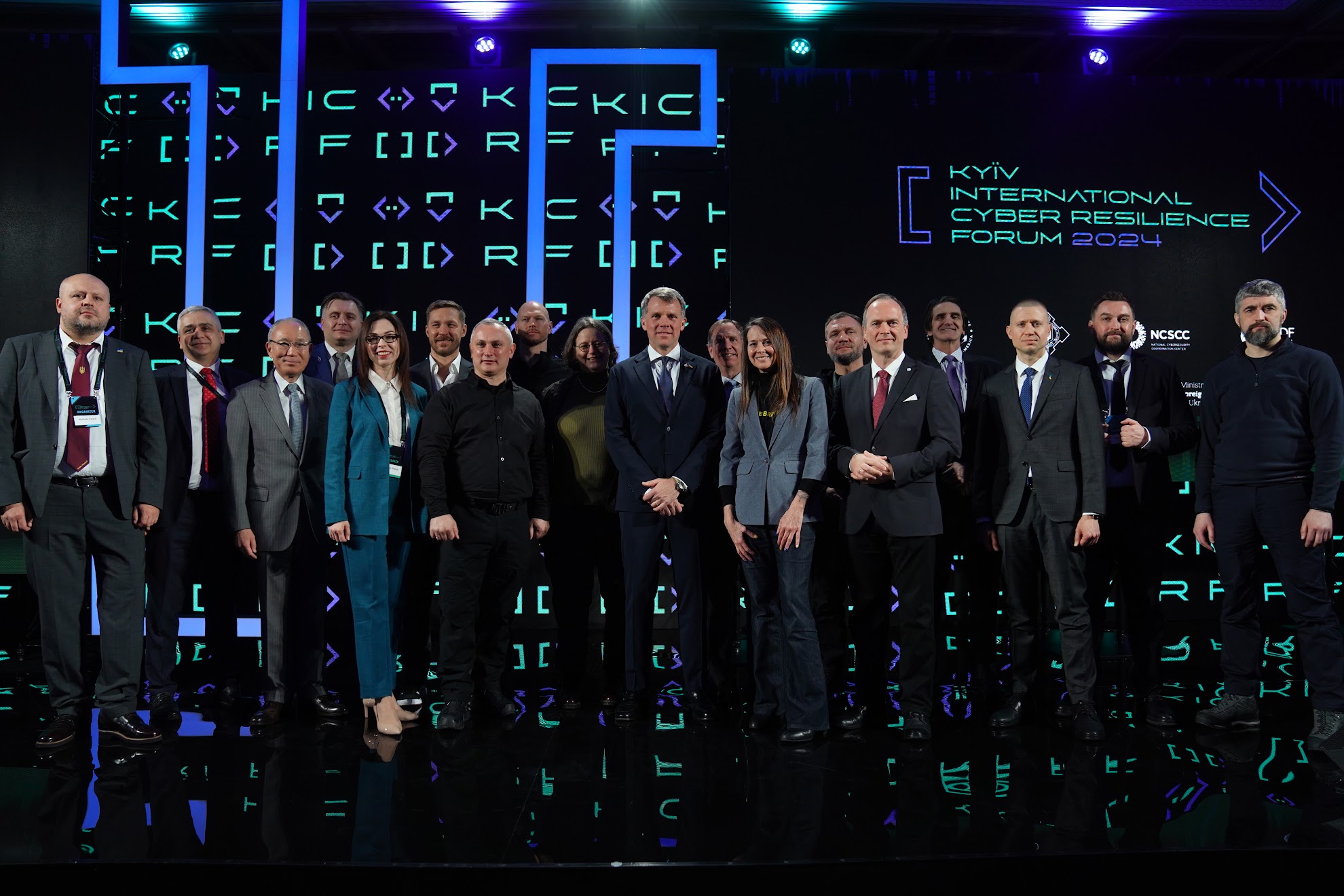
Highlights of the Kyiv International Cyber Resilience Forum 2024 emphasized the urgency for collaborative international cyber deterrence measures.
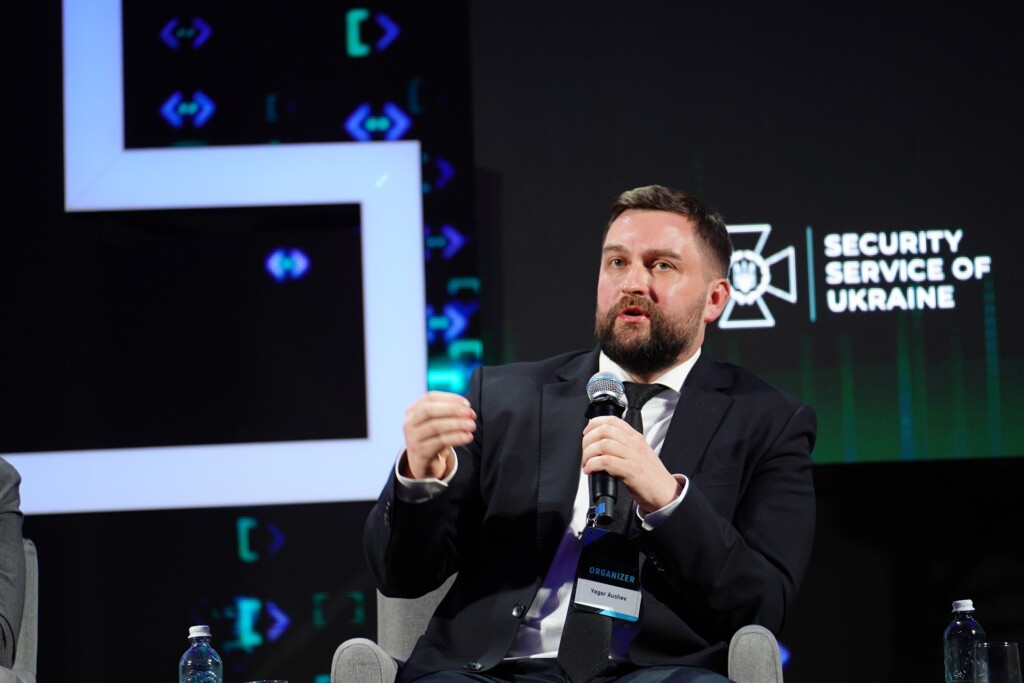
On the 7th and 8th of February, Kyiv was the focal point for an essential dialogue on cyber warfare resilience. Key state representatives, technology leaders, industry professionals, and cyber experts convened at the Kyiv International Forum on Cyber Security to deliberate on strategies leveraging Ukrainian cyber warfare experiences to enhance cyber defenses globally. The key ambition was to develop robust technological, legal, and defensive capabilities against cyber threats through international collaboration.
Ukraine’s Cyber Warfare Narrative
Ukraine has been at the cyber frontline with recent attacks targeting essential services and organizations. In the past month alone, institutions such as Ukrzaliznytsia, Parkovy, Naftogaz, Ukrposhta, Shlyakh, Monobank, and the Ministry of Agrarian Policy were compromised. The first day of the forum coincided with an attack on the Ministry of Education’s website. Mykhailo Fedorov, Minister of Digital Transformation, conveyed Ukraine’s resilience in defending against over 5,000 Russian cyber strikes since the war’s outbreak. Noteworthy was the incursion that preluded the physical invasion in 2014 and the significant offensive in January 2022. This resilience was attributed to the robust cooperation between various institutions.
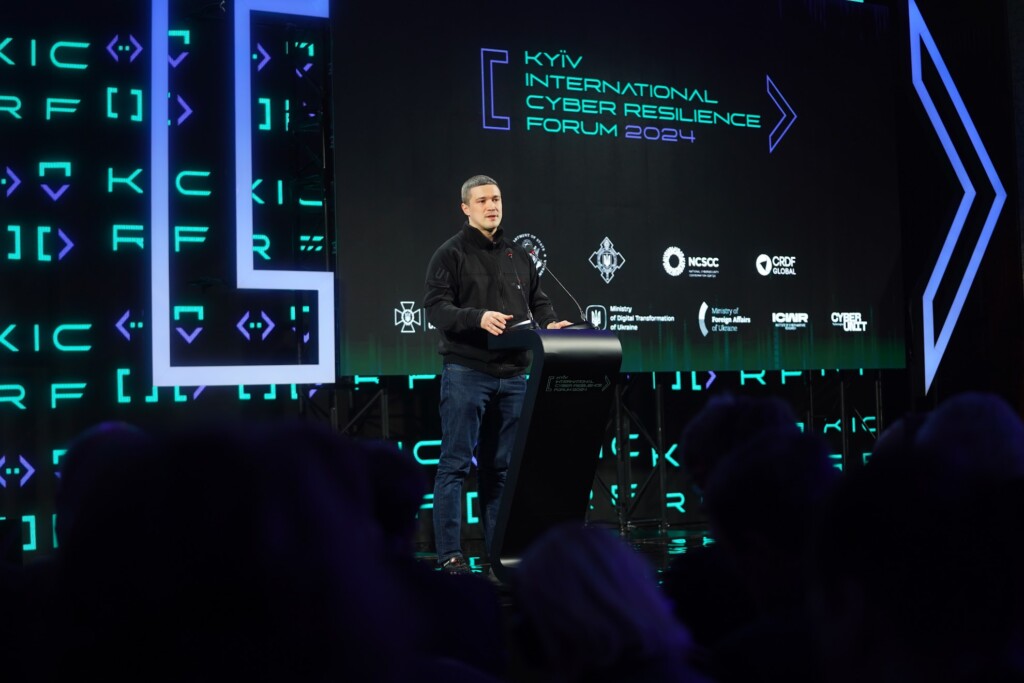
The adversaries, however, are intensifying their cyber onslaughts. As such, Ukraine is compelled to upgrade its cybersecurity measures, update pertinent legislations, train specialists, and integrate the innovation-driven private sector into national cyber defenses.
Deputy Minister of Defense Kateryna Chernogorenko illuminated the ongoing cyber warfare alongside physical conflicts. The Ukrainian Defence Ministry aims to fortify military systems to ensure they meet contemporary cyber protection standards.
Forging Cyber Diplomacy and Defense Strategies
Oleksiy Danilov, Secretary of the National Security and Defense Council, advocated for establishing a cyber diplomat role to combat cyber warfare and facilitate international cooperation. Ukraine’s digital diplomacy agenda is also being reinforced, with the Ministry of Foreign Affairs crafting plans to strengthen the nation’s cyber diplomatic engagement.
Advocates for Cyber Security Collaborative Measures
Serhiy Demediuk, Deputy Secretary of the National Security Council, calls for an overhaul in global cyber policies, urging the formation of international cyber response units. He articulated the need for unity in cyber strategy development and frequent revisits to combat evolving cyber threats. Demediuk highlighted creating cyber deterrent tools as an essential component in proactively preventing the overreach of adversaries like China and Russia.
George Dubinskyi, Deputy Minister of Digital Transformation of Ukraine, highlighted that cybersecurity forms a core part of the national digital policy. He alluded to the ‘Digital Solidarity’ initiative aimed at thwarting Russia’s access to advanced tech and pressed on the vitality of combined resilience.
Commendations were given to the ‘Tallinn Mechanism,’ a multi-nation pact intended to boost Ukraine’s cyber defenses. The forum recognized contributions from the US, including strategies like shifting cyber protection responsibility and promoting cyber diplomacy.
Yehor Aushev of Cyber Unit Technologies and Oleksandr Komarov of Kyivstar presented business perspectives on cybersecurity, affirming the essentiality of continuous investment in cyber defenses for both private and state sectors.
FAQ Section
1. What was the main goal of the Kyiv International Forum on Cyber Security?
The forum aimed to draw from Ukrainian experiences in cyber warfare to enhance global cyber resistance strategies through technology, diplomacy, international law, and active defense.
2. How many cyberattacks has Ukraine successfully repelled since the beginning of the war?
Ukraine has repelled over 5,000 Russian cyberattacks since the conflict began.
3. What is the role of the ‘cyber diplomat’ that Ukraine plans to establish?
The cyber diplomat is envisioned as a role to enhance Ukraine’s capabilities in fighting cyber wars and to foster international cyber cooperation.
4. What is the Tallinn Mechanism?
It is an international agreement designed to coordinate cyber capacity building to support Ukraine’s defense against cyber aggression and enhance long-term cyber resilience.
5. What cyber security approaches are being implemented by the US?
The US is shifting cyber protection responsibility from consumers to the government and corporations, advancing cyber diplomacy, and encouraging investments in cybersecurity.
Conclusion
The pivotal discussions at the Kyiv International Forum on Cyber Security have underscored the significance of strengthening international ties and frameworks for cyber deterrence. Ukraine’s bold stance on cyber resilience and its proposition for international collaboration offers a blueprint for democratic nations to revamp their cyber defenses in the face of escalating digital warfare. The strategic insights shared by Ukrainian officials and global representatives at the forum convey a clear message: cyber security is an all-encompassing aspect of national and global security, necessitating a unified, innovative, and proactive approach to deterrence.
[ad_2]
Note: The information presented here is a synthesized version of news content sourced from various internet-based outlets by AI news feed technology, maintained by TheUBJ. The original article, which this content references, is available at https://ubn.news/ukraine-calls-on-its-partners-to-create-new-international-cyber-deterrence-tools-what-was-discussed-at-the-first-annual-international-forum-on-cyber-security-in-kyiv/.