

































X-ray astronomy has been reshaping our understanding of the cosmos by allowing us to perceive the universe through ‘X-ray vision’—a concept once reserved for the realm of science fiction. Astronomers leverage this technique to investigate some of the most energetic and tumultuous phenomena in space.
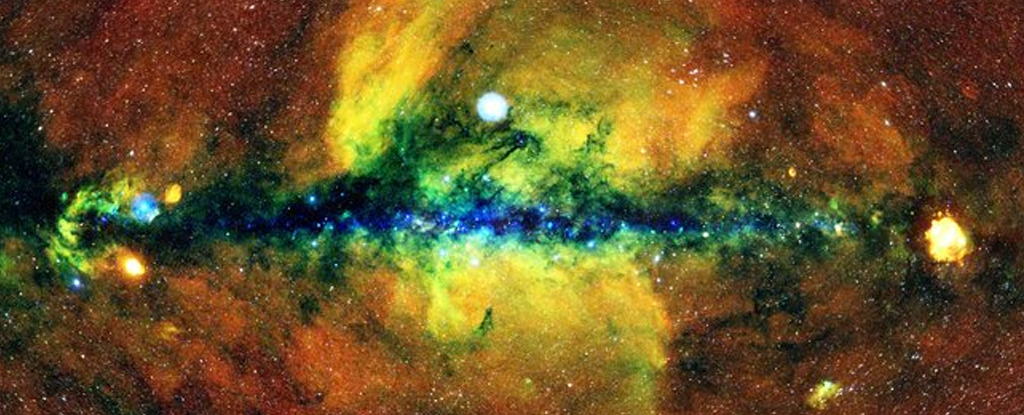
The eROSITA consortium at the Max Planck Institute for Extraterrestrial Physics has recently enriched our cosmic perspective with a new X-ray data haul from the eROSITA survey, encapsulating half of the X-ray sky. This compilation showcases about 900,000 distinct X-ray sources, surpassing the total number of such sources previously observed over the entire history of X-ray astronomy.
The versatility of eROSITA—an advanced soft X-ray imaging telescope perched on the Spectrum-RG satellite—is evident from its comprehensive all-sky survey, which reveals a variety of cosmic occurrences and characteristics. Whether it’s detailing the sheer number of supermassive black holes or galaxies’ energetic interactions, eROSITA provides a more nuanced picture of the universe’s structure and evolution.
As the eROSITA team continues sifting through the expansive data sets and sharing them with the global scientific community, we can only anticipate more revolutionary discoveries in the fascinating field of X-ray astronomy.
About eROSITA
eROSITA’s journey in the cosmos, including its pivotal scanning missions, enables a profound analysis of the high-energy universe. With over 50 scientific papers already published based on eROSITA’s findings, the telescope’s contributions enhance our grasp of cosmic events and the environments around supermassive black holes and galaxy clusters.
eROSITA’s Treasury of X-ray Sources
The newly acquired data from eROSITA paints a captivating picture of the cosmos at varying X-ray energy levels, each unravelling different properties of the astronomical sources. This rich dataset lays the groundwork for future endeavors to delve deeper into the universe’s mysteries using high-energy observations.
Zeroing in on Specific X-ray Objects
eROSITA’s focused observations offer invaluable insights into the galactic infrastructure and the dynamics of large-scale cosmic formations. By examining intense X-ray emissions, the telescope sheds light on the interactions occurring within and between galaxy clusters, contributing significantly to our understanding of the cosmos’s formation.
eROSITA’s Past Work and Future
Since its commencement in late 2019, eROSITA has notably advanced X-ray astronomy, providing detailed glimpses into the evolving universe. Its observations of a distant quasar and the hot gas surrounding our galaxy are just a few exemplary highlights of its achievements.
FAQs about X-Ray Astronomy and eROSITA
- What is X-ray astronomy?
- X-ray astronomy is a branch of space science that uses X-ray observations to study astronomical objects such as black holes, galaxy clusters, and supernovae.
- How does eROSITA contribute to X-ray astronomy?
- eROSITA contributes by mapping the sky in X-rays and identifying numerous celestial sources that emit at these wavelengths, furthering our knowledge of the universe’s high-energy phenomena.
- Can we see X-rays from Earth?
- No, X-rays from astronomical objects are absorbed by Earth’s atmosphere, so X-ray telescopes need to be placed in orbit to observe them effectively.
- What kind of objects does eROSITA detect?
- eROSITA detects a range of objects, including supermassive black holes, stars, galaxy clusters, and other energetic astronomical events and objects.
Conclusion
The groundbreaking work by eROSITA represents a monumental leap in the field of X-ray astronomy, offering a comprehensive X-ray view of the universe. Through advanced technology and dedication, astronomers continue to decipher the enigmatic high-energy realm of the cosmos, deepening our understanding of the universe’s ever-evolving narrative. The vast array of data and images provided by eROSITA promises to keep the astronomical community busy, potentially rewriting the textbooks with new cosmic knowledge.
[ad_2]