
































In a decisive move against cybercrimes, the US government has imposed sanctions on the affiliates of the notorious LockBit ransomware group.
The action targets two specific Russian nationals, Artur Sungatov and Ivan Gennadievich Kondratiev, who have been freshly indicted by US authorities for their alleged associations with the cyber extortion ring. These sanctions come in the wake of a collaborative law enforcement effort to dismantle LockBit’s capabilities.
Kondrateiv has also been identified for his alleged tie-ins with additional ransomware entities such as REvil, RansomEXX, and Avaddon.
“Our nation stands firm against cyber extortion and theft against our people and institutions,” declared U.S. Deputy Secretary of the Treasury Wally Adeyemo. “Utilizing a comprehensive approach, we are committed to defending against cyber threats, taking to task the perpetrators and their enablers.”
Under the fresh sanctions, engaging in financial transactions with the implicated individuals is now illegal for any US entity or citizen. This strategy is also intended to discourage ransom payments to hackers.
These measures are aimed at directly affecting the financial gains of the cybercriminals instead of just the groups, which could otherwise easily evade sanctions by rebranding or renaming.
Violations of US sanctions could lead to severe financial penalties and even criminal charges.
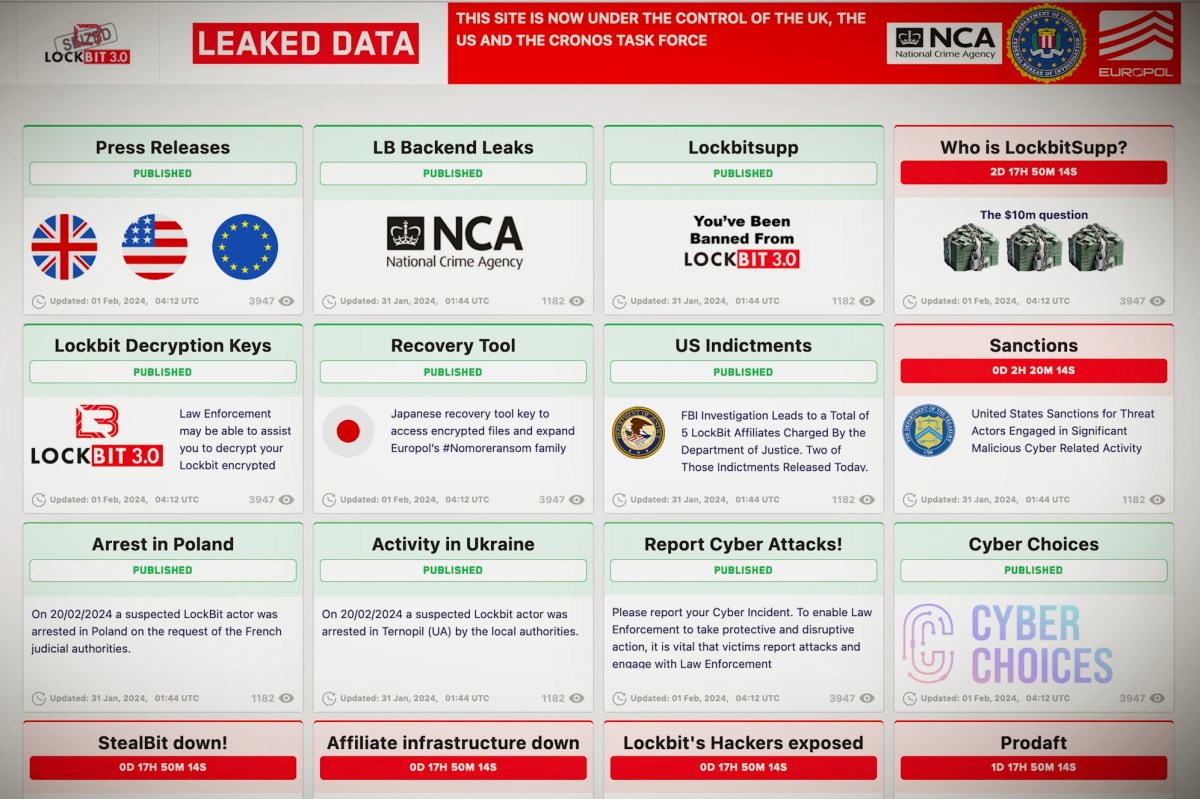
The announcement was timed with a revelation from US and UK authorities about a concerted operation to upend LockBit’s infrastructure. The notorious gang had traditionally published stolen data on their dark web leak site, threatening to release it unless ransoms were paid.
LockBit stands accused by US prosecutors of initiating over 2,000 ransomware attacks internationally, accumulating around $120 million in ransoms since its inception in 2019.
LockBit has a long history of attacks, targeting institutions such as the California Department of Finance, Royal Mail in the UK, and the American MCNA dental insurance giant.
Tuesday’s sanctions represent a continuation of measures against LockBit and other prolific ransomware groups.
Previous arrests include Russian-Canadian Mikhail Vasiliev and Ruslan Magomedovich Astamirov—both of whom are currently awaiting trial. Another Russian national, Mikhail Pavlovich Matveev, was sanctioned in 2023 and remains at large with a substantial bounty on information leading to his arrest.
The suspected head of LockBit, known as LockBitSupp, remains unnamed, but authorities are planning to release more information along with a $10 million reward for leads on their identity or location.
While US policy does not forbid ransom payments to attackers, it strongly advises against this practice due to the potential of encouraging more ransomware attacks. Experts note that victims who acquiesce to ransom demands are often targeted repeatedly.
For further details:
FAQ Section
-
What actions has the US government taken against LockBit ransomware affiliates?
The US has sanctioned two Russian nationals believed to be part of the LockBit ransomware group, making it illegal for American individuals or companies to transact with them.
-
What are the consequences of these US sanctions for the sanctioned individuals?
It inhibits the sanctioned individuals’ ability to profit from ransomware as US persons are barred from transacting with them, and violators could face substantial fines and criminal prosecution.
-
Why does the US not encourage paying ransoms to hackers?
Paying ransom is discouraged as it can perpetuate the cycle of cyberattacks, and there’s a heightened risk for victims to be targeted again in the future.
-
Are there any rewards for information on the LockBit members?
Yes, the US government has offered a $10 million reward for information leading to the arrest or identification of the LockBit group leader and other associated cybercriminals.
-
What is the extent of the damage caused by the LockBit ransomware?
LockBit is responsible for over 2,000 cyberattacks globally, with ransom payments totaling about $120 million since its establishment in 2019.
Conclusion
The sanctions by the US government represent a significant step in the global fight against ransomware. By targeting individual members of groups like LockBit, authorities aim to disrupt the financial incentives that drive such malicious cyber activities. With international law enforcement agencies mobilizing to counteract cyber threats, the pressure on ransomware gangs continues to mount. As developments unfold, it is clear that the war on cybercrime demands a vigilant, coordinated, and resilient approach from governments, businesses, and individuals alike.