































![Analyzing the Capabilities of the U.S. F-117 Stealth and A-10 Attack Planes Versus Russia's Su-25 [Military Talk by Reporter Lee Hyun-ho]](https://contents-cdn.viewus.co.kr/image/2024/01/CP-2023-0094/image-2e64e57c-44a1-46c1-90a4-25f2caec92cc.jpeg)
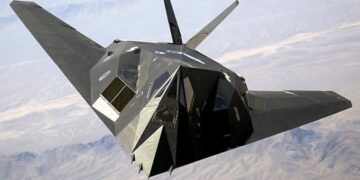
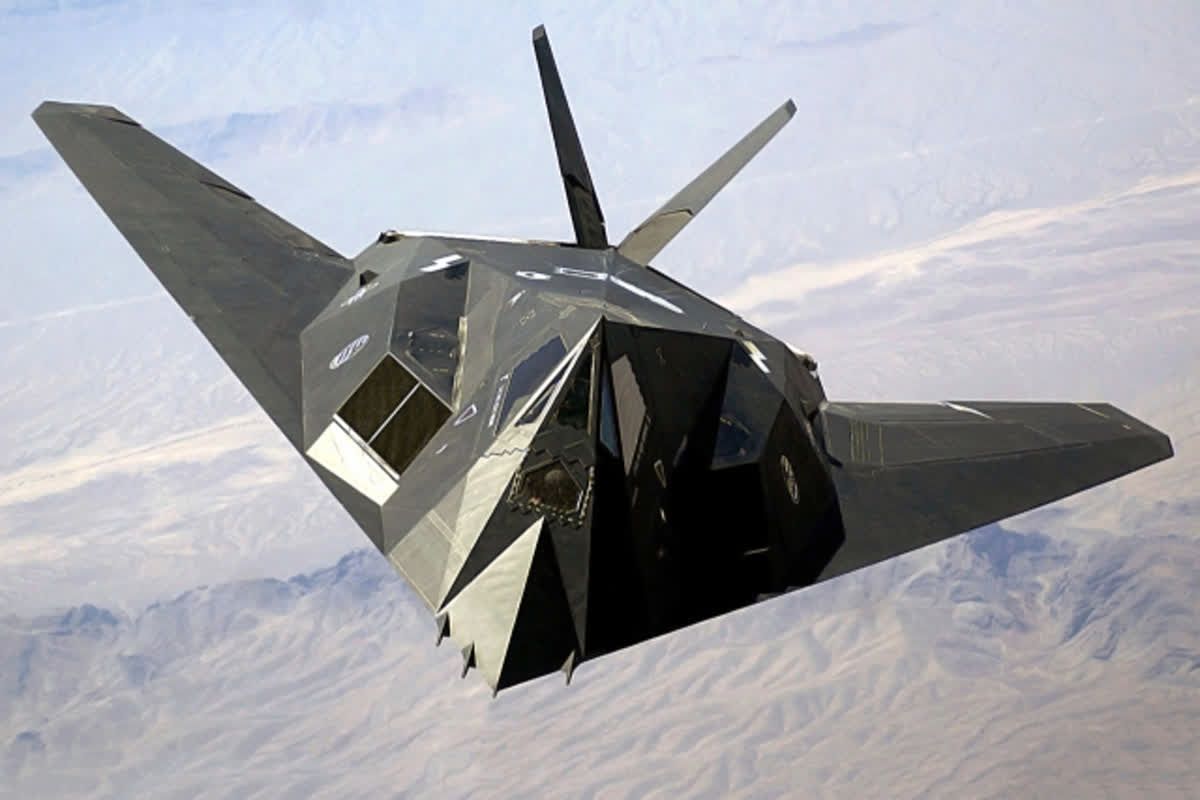
The Lockheed Corporation-designed “F-117” Nighthawk is the fruition of incorporating stealth technology across an entire aircraft in a grounded approach, succeeding the Lockheed Have Blue stealth concept. The F-117 notably established its reputation during the Gulf War in 1991, marking the first real-world deployment of a stealth attack aircraft in combat.
Stealth attack aircraft gained priority for development following severe losses the U.S. sustained from North Vietnamese surface-to-air missiles in the Vietnam War and damages experienced by the Israeli Air Force due to the Soviet Union’s advanced surface-to-air missiles in the Fourth Middle East War. Consequently, the Defense Advanced Research Projects Agency set forth a direction for Lockheed and Northrop to pioneer stealth aircraft. The foundational prototype, ‘Have Blue,’ executed its initial flight in December 1977 but succumbed to an accident afterward.
The subsequent F-117, building on its predecessor’s design, was equipped with internal weapons and sensors designed for precision attack missions. The U.S. military maintained secrecy of the aircraft until its inaugural public unveiling in 1988 through a photograph.
The F-117’s initial successful mission occurred in Panama, with two out of six aircraft that embarked from Tonopah Base and refueled in flight, targeting an infantry barracks in Panama City and the Rio Hato region. Despite challenging weather and communication hitches, the F-117 covertly soared undetected by radar to deliver a 2000-pound bomb in a near-perfect strike.
Stealth Surprise Attack Specialist: The F-117 Aircraft
During the Iraq War, the F-117 once again proved its stealth capabilities. Contentious to U.S. forecasts, Iraq’s air defenses failed to detect the F-117, even though Iraq was prepared for a potential F-117 involvement. Surprise strikes by the F-117 crippled key sites in Iraq, such as the presidential palace, the Ba’ath Party headquarters, and military command centers. After launching from Khamas Mushait Base, thirty-six F-117s soared to their objectives, and, using onboard sensors, precisely deployed laser-guided bombs without a traditional fire control system. The Iraqi forces, unable to effectively respond, soon agreed to a ceasefire. Analysts affirmed the indispensable role the F-117 played in the conflict, shortening its duration and securing air dominance.
![A Glimpse into the Attack Aircraft of Military Superpowers: The U.S. F-117 Stealth, A-10 Attack Plane, and Russian Su-25 [Military Talk by Reporter Lee Hyun-ho]](https://contents-cdn.viewus.co.kr/image/2024/01/CP-2023-0094/image-1e6e4935-0054-43e6-bc8d-8a8b795a075c.jpeg)
The U.S. Air Force, facing limitations with aircraft such as the F-4 and F-105 during close air support missions in the 1960s Vietnam War, embarked on developing a new model suited for this role: the A-10 Thunderbolt. Existing aircraft proved suboptimal for hovering and low-altitude maneuvering despite their speed and payload capabilities. This led to the 1966 development initiative for a new aircraft with a long hovering time, various weapon capabilities, and superb maneuverability at low altitudes.
Demanded for the new attack plane were efficiency in combat and survivability. It was essential that the new model not only supersede the B-57 bombers, A-37s, and A-1 attack planes in reliability and maintenance but also operate from close-range airfields. The A-10 perfectly encompassed these criteria.
To be continued in Part 2…
FAQ Section
What is the F-117 Nighthawk?
The F-117 Nighthawk is an American stealth attack aircraft designed by Lockheed Corporation, which utilized full stealth technology for missions such as precision strikes.
Why was the development of stealth aircraft important for the U.S.?
Stealth aircraft were deemed necessary after the U.S. and its allies experienced significant losses from enemy air defenses that proved lethal to non-stealthy planes during conflicts like the Vietnam War.
How did the F-117 perform in combat?
The F-117 executed successful surprise attacks in both the invasion of Panama and the Iraq War, displaying its ability to operate undetected and deliver precision strikes.
What role does the A-10 Thunderbolt play?
The A-10 Thunderbolt, developed after aircraft like the F-4 and F-105 were found unsuitable, fulfills close air support missions requiring hovering ability, low-altitude maneuverability, and the capability to carry an assortment of weaponry.
What will be discussed in Part 2 of this series?
Part 2 will likely continue discussing the various attack aircraft, possibly expanding on the capabilities of the A-10 and introducing the Russian Su-25 attack aircraft.
Conclusion
In revealing the multifaceted roles and strategic advantages of stealth and attack aircraft like the U.S. F-117 Nighthawk and A-10 Thunderbolt, we gain insight into the evolution of aerial warfare. A meticulous design, technological advancement, and strategic deployment have allowed these aircraft to achieve feats such as evading detection and accomplishing precise combat missions, underscoring their critical influence on modern military outcomes. The comparative analysis of these aircraft will continue, amplifying our understanding of their import in global air combat capabilities.