
































![도입 50년 F-4 ‘팬텀’ 이제 퇴역하는 이유…평양 정밀타격 장거리미사일 ‘팝아이’ 유일 운용[이현호 기자의 밀리터리!톡]](https://contents-cdn.viewus.co.kr/image/2024/02/CP-2023-0094/image-9ebe5857-8845-42ac-af83-762612a9f861.jpeg)
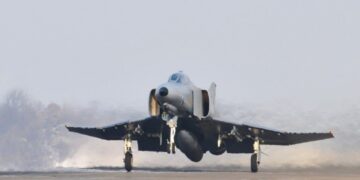
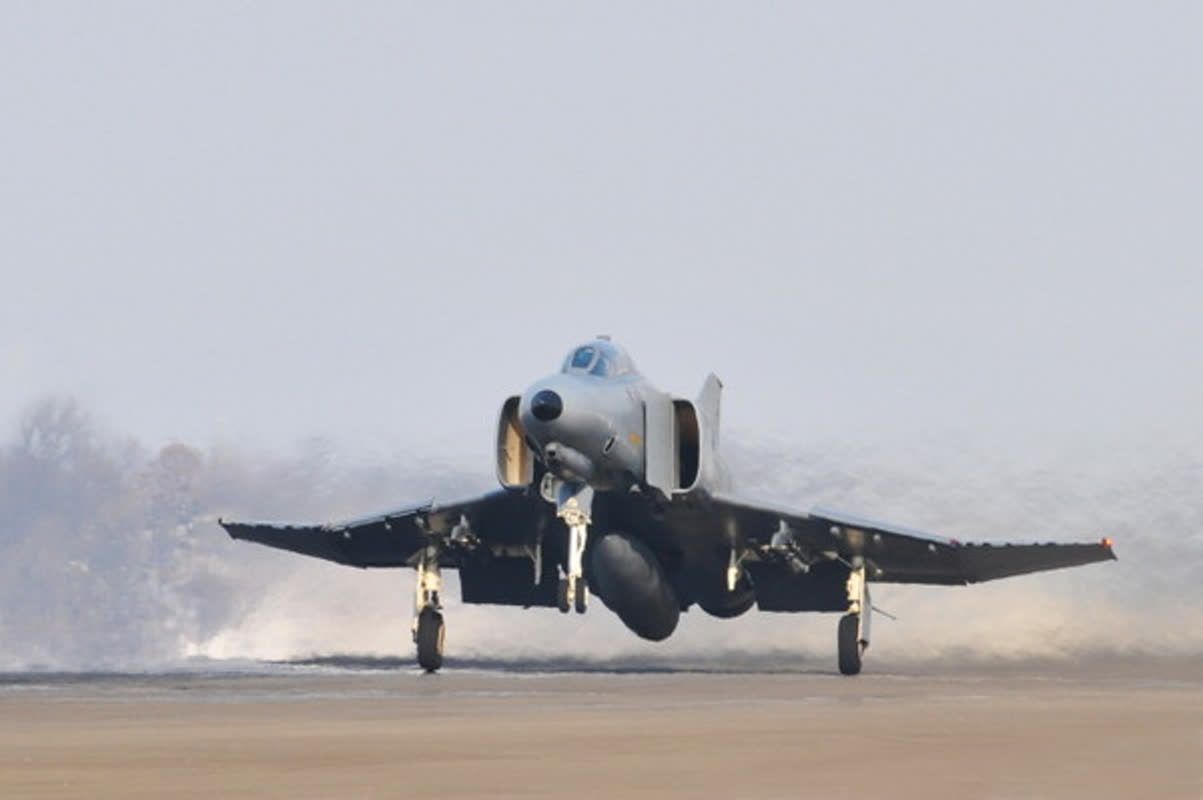
Having been a pivotal part of the Korean Air Force, the F-4 Phantom has served as a versatile, all-weather combat aircraft boasting a formidable 7.25-ton weapon capacity along with advanced radar and navigation systems. Before the introduction of the KF-16s in 1994, the Phantom reigned as the key fighter jet of the Republic of Korea Air Force, tasked with both air-to-air and air-ground objectives.
Known affectionately as the “Immortal Goblin,” the F-4 Phantom earned its moniker due to the fiery red emissions from its twin engines, which some likened to the face of a goblin. Additionally, the potent combat abilities of the Phantom instilled fear in adversaries, underpinning its lengthy tenure in service.
About 20 Phantoms are still in service within the Air Force. Alongside the F-4, the Air Force also operates approximately 100 older fighters, including close to 80 F-5s. This represents roughly 20% of the overall fighter fleet (exceeding 410). The number of nations still flying the aging F-4 includes a select few such as South Korea, Turkey, Greece, and Iran. There are plans to commence the F-4E’s decommissioning process starting from 2024.
The long service life of the F-4 Phantom—over half a century since its debut in 1969—raises the question: why has this aircraft’s retirement been so protracted? Despite the procurement of modern fighters like the KF-16, F-15K, and F-35 stealth aircraft since the 1990s, the Air Force has extended the operational life of the venerable F-4s, emphasizing its unique capacity to deploy the AGM-142 “Popeye” long-range air-to-ground missile and its impressive payload capabilities.
The Popeye, an Israeli-designed missile, has the ability to precisely strike targets within a 1-meter margin up to 112 kilometers away. It has also garnered the moniker “Popeye Missile.”
![도입 50년 F-4 ‘팬텀’ 이제 퇴역하는 이유…평양 정밀타격 장거리미사일 ‘팝아이’ 유일 운용[이현호 기자의 밀리터리!톡]](https://contents-cdn.viewus.co.kr/image/2024/02/CP-2023-0094/image-9ad5908c-aef3-4117-8852-a0bb7f313fa5.jpeg)
The Popeye’s dimensions are notable: a length of 482 cm, a diameter of 53.3 cm, and a weight of 1,300 kg, with a 350-kg warhead capable of penetrating 1.5 meters of reinforced concrete. Added precision is achieved through TV cameras and infrared guidance systems.
Since its deployment in 2001 with an investment of 200 billion Korean won for 100 units, the Popeye missile stood as the Air Force’s sole strategic weapon capable of executing precision strikes on targets in Pyongyang from afar, until the entry of the longer-range SLAM-ER (278 km) and Taurus (500 km) missiles. Notably, only the F-4 Phantom was capable of carrying and launching the Popeye, underscoring its strategic importance within the Air Force’s arsenal.
Despite considerations for software development to enable the F-15K to carry the Popeye, such plans were abrogated following the introduction of missiles with extended ranges, like the SLAM-ER and Taurus. The Popeye’s combat relevance is retained due to its hefty 230 kg warhead, which packs a more powerful punch than that of the SLAM-ER.
The F-4 Phantom, a best-seller among the Western fighter jets with over 5,000 units produced, boasts a bomb and missile carrying capacity of up to 8.5 tons. This payload potential is comparable to that of the B-29 bomber active in World War II and the Korean War (9 tons), and even surpasses modern counterparts like the KF-16 (7.7 tons) and the F-35 stealth jet (8 tons).
An insider from the military commented on the F-4’s ongoing significance: “Armed with the capability to deploy the Popeye missile and a vast array of bombs and missiles, the F-4 continues to fulfill an essential role in preemptive strikes against North Korea in the event of full-scale hostilities.”
Part 1
Part 2
FAQ About the F-4 Phantom’s Role in the Air Force
- What roles has the F-4 Phantom fulfilled in the Air Force?
The F-4 Phantom has served as a versatile, all-weather fighter jet responsible for both air-to-air and air-to-ground missions. - Why has the F-4 Phantom remained in service for so long?
Its longevity is largely due to its capability to carry and deploy the AGM-142 “Popeye” missile, along with its significant weapon payload capabilities. - How does the Popeye missile compare to newer missiles?
While the Popeye’s range is shorter than some newer missiles, its warhead is heavier, thus delivering a more powerful blow to targets. - What is the F-4 Phantom’s bomb and missile capacity?
The F-4 Phantom can carry up to approximately 8.5 tons of bombs and missiles. - When is the F-4 Phantom expected to be phased out?
The Air Force plans to start retiring the F-4 Phantom fleet from 2024.
Conclusion
The F-4 Phantom’s remarkable half-century tenure in the Air Force is a testament to its strategic significance, bolstered by its unique ability to carry the AGM-142 “Popeye” missile and its immense payload capacity. Despite the shift towards modern aircraft, the Phantom’s potent armaments keep it as a crucial component of the military’s aerial strategy, particularly considering the volatility of geopolitical threats. As we approach the scheduled retirement of the Phantom, it leaves behind a legacy of resilience and adaptability in military aviation history.