
































[ad_1]

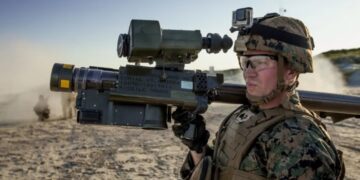
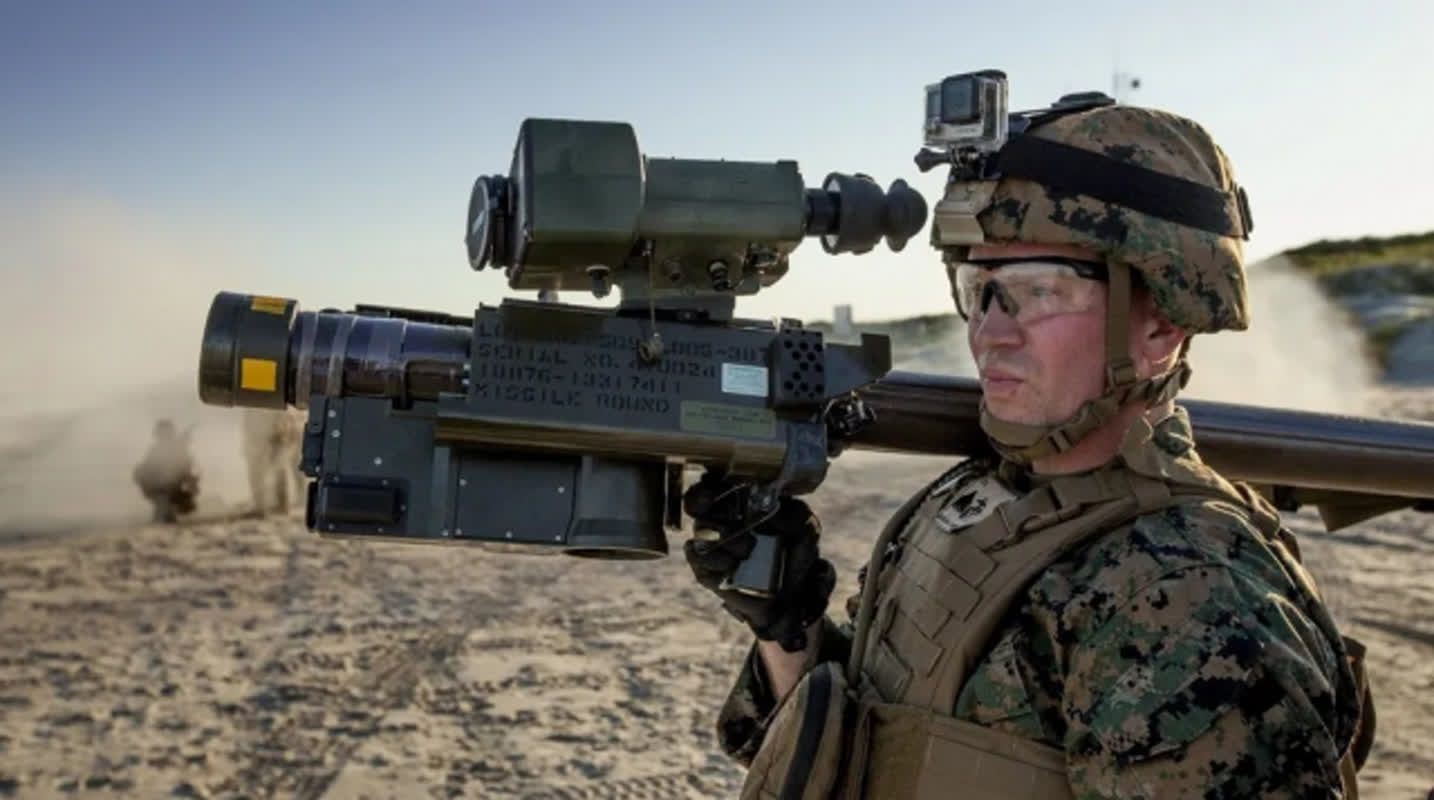
The hand-held air-defense system “FIM-92 Stinger” emerged as a successor to the first-generation MANPADS, the FIM-43 Redeye, used by the US Army.
This updated model addressed the FIM-43 Redeye’s limited capabilities such as its poor omnidirectional tracking, susceptibility to infrared counter-measures (IRCCM), and restricted maneuverability under 3G forces. Its formal designation, FIM-92, was assigned in 1972 and it has been part of the US arsenal since 1978.
Its combat debut occurred in the 1982 Falklands War when the Special Air Service (SAS) of the British Army successfully downed an IA-58 Pucara and Puma helicopters belonging to Argentina’s Air Force.
In the conflict with the Soviet Union, the FIM-92 Stinger became a prominent tool for the Afghan Mujahideen, supported covertly by the CIA. They used 400–900 Stingers to down numerous Soviet helicopters, marking the weapon’s significant impact on the Soviet forces.
SAS’s Notable First Combat Application
The FIM-92C version, unveiled in 1987, included a reprogrammable microprocessor (RMP) that improves targeting by capturing both infrared and ultraviolet (UV) radiation of enemy crafts concurrently. In 1995, an update called the “FIM-92E RMP Block I” emerged with the ability to take down small UAVs. The system saw further improvements with the “FIM-92F” software update in 2001.
Later on, the “FIM-92G” and “FIM-92H” versions, upgrades from the FIM-92D, were actively deployed in combat. Even more advanced iterations like the “FIM-92J,” which used a proximity fuse, and the “FIM-92K,” with added data link capabilities, were developed in succession.
Military analysts have acknowledged the Stinger’s sustained relevance on the modern battlefield, given its use in real-world scenarios for over four decades despite technological advancements.

During the 1979 Soviet invasion of Afghanistan, the “Mi-24 Hind” attack helicopter gained infamy as the “Butcher of Afghanistan.” Nonetheless, it faced challenges in the Afghan War because of the FIM-92 Stinger, a MANPADS that gave the Mi-24 and other Soviet aircraft a difficult time.
The Mujahideen received these Stingers and effectively employed them to shoot down not just the Mi-24 but also aircraft operating around Kabul Airport and various Soviet fighters. The Stinger achieved a significant success rate and was considered the bane of the Mi-24 in that period.
In recent conflicts, the Stinger has shown its worth by intercepting a subsonic cruise missile and even a Russian OTR-21 ballistic missile, once again proving its effectiveness.
The FIM-92 Stinger was designed to rectify the limitations of its predecessor, the FIM-43A Redeye, which had a revolutionary infrared guidance system but suffered from a restricted firing angle. The Stinger was created to overcome these shortcomings.
Part. 2…
[ad_2]
FAQ Section:
- What is the FIM-92 Stinger?
- The FIM-92 Stinger is a man-portable air-defense system developed by the US as an advanced version of the FIM-43 Redeye, designed to shoot down aircraft.
- When was the FIM-92 Stinger first used in combat?
- The FIM-92 Stinger was first used in combat during the Falklands War in 1982 by the British Army’s Special Air Service (SAS).
- Against which aircraft was the FIM-92 Stinger notably effective in the Afghan War?
- The FIM-92 Stinger was particularly effective against the Soviet Union’s Mi-24 Hind attack helicopter and various other aircraft.
- How has the FIM-92 Stinger evolved since its inception?
- The FIM-92 Stinger has undergone numerous upgrades, including improvements in its targeting capabilities, the addition of reprogrammable microprocessors, and the development of variants with proximity fuses and datalink functions.
Conclusion:
The FIM-92 Stinger, with its history of significant combat impacts and continuous upgrades, exemplifies the evolution of military technology that adapts to the changing nature of war. From its early days crippling Soviet helicopters in Afghanistan to modern applications intercepting high-speed missiles, the Stinger represents both historical milestones and current capabilities in air-defense systems. Its storied past and ongoing development ensure that it remains a weapon of note in military strategies around the globe.