

































[ad_1]
A new definition for “Ahjumma” is creating controversy.

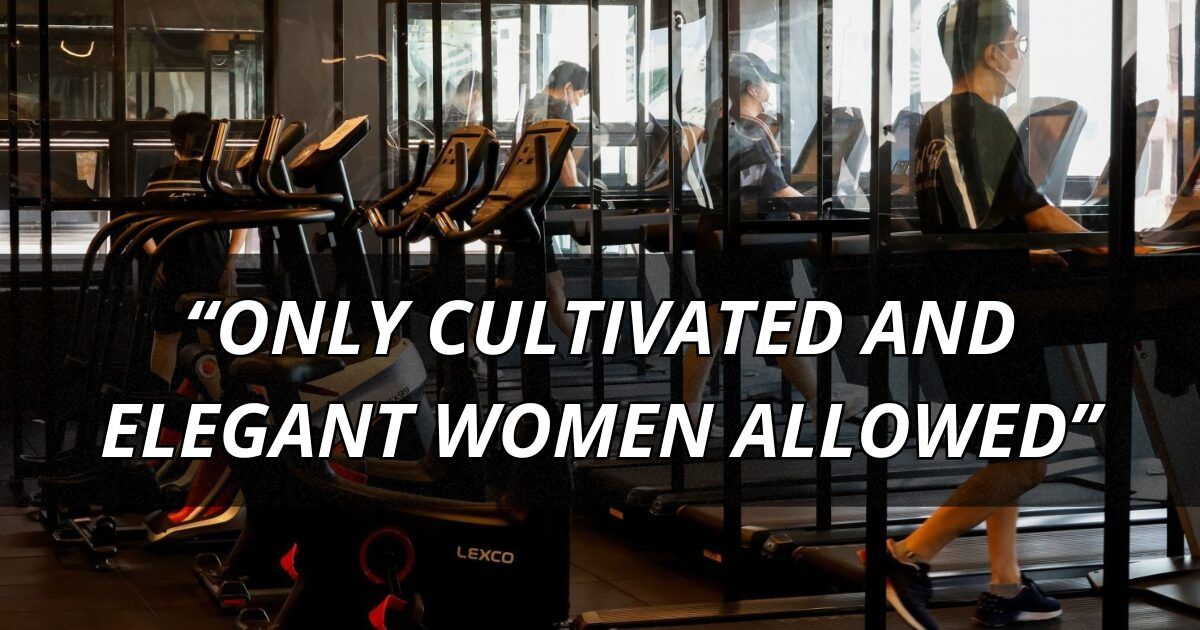
An Incheon gym is the latest Korean establishment to stir public opinion with its controversial policy of barring a specific segment of the population—this time, the exclusion zone is for “ahjumma”, a term used for middle-aged or married women in Korea.
As shared on Blind, a platform that requires employment verification for user participation, a gym sparked uproar when they displayed a sign stating “Ahjumma not allowed to enter,” with a subtext asserting “Only refined and graceful women permitted.”

While the term ahjumma was once merely a colloquial way to address a certain demographic, it has evolved into a term with negative connotations, often utilized as an insult online, leading to a reluctance to use it in more public or formal contexts in Korea.
The gym’s sign explicates its intent by outlining eight specific behaviors it associates with being an ahjumma, effectively setting its criteria for entry.

The criteria defining an ahjumma include:
- “A penchant for freebies, regardless of age.”
- “Receiving verbal abuse without comprehending the reason.”
- “Occupying seats meant for expectant mothers on public transportation.”
- “Sharing a single coffee order among two at a cafe.”
- “Illegally discarding food waste in public restrooms or other toilets.”
- “Being stingy with one’s own resources but not with others’.”
- “Repeatedly expressing the same thoughts due to poor memory and judgment.”
The owner of the fitness center claimed that such behaviors led to “substantial damages,” which prompted the establishment of the “No Ahjumma Zone.”
Some ‘ajumeoni’ (the respectful term for older women) would bring laundry baskets to the gym, leave the hot water running for long periods, increasing the water bill significantly, and make inappropriate comments to younger female patrons, insinuating their childbearing capabilities.
— Gym owner
This exclusion policy has added to the societal concern regarding the increasing discrimination and intolerance within Korea, leading to public spots being inaccessible to various demographics. Article 11 of the Korean Constitution prohibits discrimination based on “sex, religion, or social status” in all areas, including “political, economic, social, or cultural life.” The nation’s human rights authority deemed “no kids zones” illegal in 2017, grounding the decision in the mentioned article. However, lacking enforcement power, the National Human Rights Commission of Korea can’t compel businesses to comply.
Despite the legal ambiguities permitting these practices, the “No Ahjumma Zone” at the gym has provoked a strong response from Korean netizens, many of whom see these measures as archaic, unfairly conflating age with negative behavior.

- “Prejudices from the early 2000s.”
- “Shocked that such a place exists.”
- “I avoid ‘no kids zones,’ and similarly, many will shun such exclusive places.”
- “Why equate ‘problematic customer’ with ‘ahjumma?’ Anyone in the service sector knows that problematic behavior isn’t age-specific.”
- “Curious about their definition of what constitutes a ‘proper woman’.”

Current Affairs in Korea
Spread the Word


[ad_2]
FAQs about the “No Ahjumma Zone” Gym Policy
What does “Ahjumma” mean?
Ahjumma is a Korean term that typically refers to a married or middle-aged woman. It has gained a negative connotation and is sometimes used derogatorily in contemporary culture.
Can businesses in Korea legally enforce a “No Ahjumma Zone”?
While discrimination is prohibited by Article 11 of the Korean Constitution, businesses may argue for such policies based on freedom of contract or private autonomy. The National Human Rights Commission of Korea considers these types of exclusionary policies illegal, but it does not have the authority to enforce compliance.
What behaviors qualify someone as an “Ahjumma” according to the gym’s policy?
According to the gym’s posted criteria, behaviors such as seeking freebies, occupying priority seating without due need, exhibiting thriftiness inappropriately, and repeating oneself due to poor judgment are indicative of being an “Ahjumma.”
Has there been a public response to the gym’s policy?
Yes, the “No Ahjumma Zone” policy has elicited criticism and concern from Korean netizens who view it as discriminatory and an unfair generalization of older women’s behavior.