

































Newcomer Seal Security, hailing from Tel Aviv and founded by ex-members of the prestigious Israeli Unit 8200, has unveiled its presence alongside securing $7.4 million in seed investments. Vertex Ventures Israel spearheaded the round with backing from Crew Capital, PayPal Alumni Fund, and Cyber Club London.
The discovery of the Log4j vulnerability and subsequent software supply chain executive order by the White House has heightened awareness in the software development community about the criticality of updating open-source dependencies. While detecting vulnerabilities is par for the course, the actual remediation – typically just an update – becomes the real labor-intensive task, often requiring dedicated teams in large organizations.
Seal’s establishment came from the trio of former 8200 Unit experts – Itamar Sher as CEO, Lev Pachmanov as CTO, and Alon Navon as CPO. Bringing their diverse experience from Cymmetria, Curv, and PayPal, the founders merged their paths in the summer of 2022 with a shared vision to proactively build security solutions.
For CEO Sher, being hands-on in creating solutions was the driving force behind his move into entrepreneurship. With a background in the more disruptive field of cybersecurity at Cymmetria, he now embraces the comprehensive startup journey as Seal’s leader.
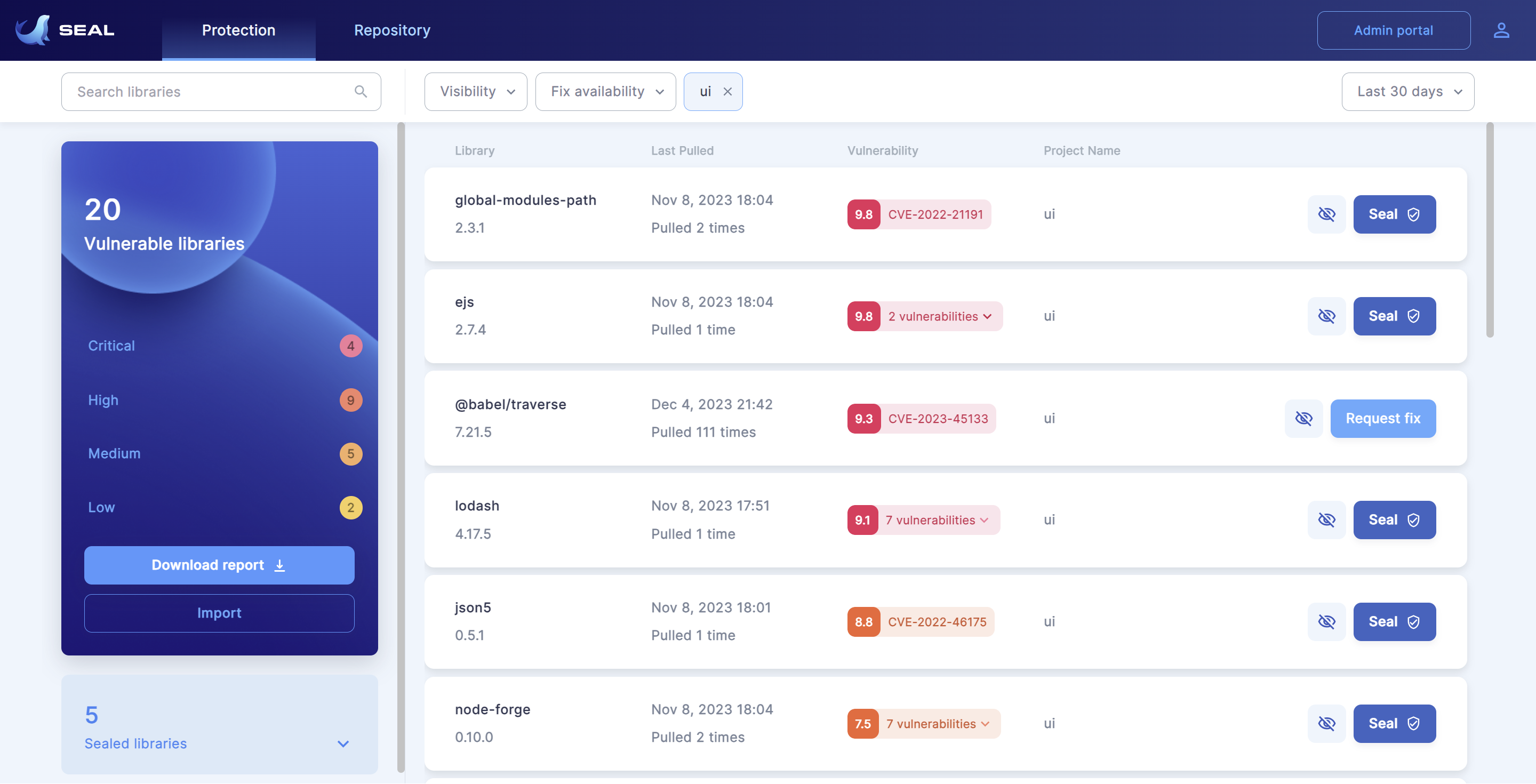
Image Credits: Seal Security
Unique to Seal, the platform not only alerts but acts – it patches the vulnerabilities, somewhat diverging from the industry norm of merely updating. This actionable approach stems from Sher’s experiences at PayPal, where he noted a gap in tools that didn’t simply detect but also resolved security issues. Seal aims to streamline the noisy flood of alerts that could overwhelm developers by automating patch application to codebases, all of which is deeply integrated with GitHub repos and CI/CD pipelines.
The automation is in part driven by leveraging machine learning, particularly large language models adept at pinpointing commits that repair vulnerabilities. This clever application of AI allows Seal Security to provide a scalable solution that wasn’t feasible just a few years ago.
“The bedrock of today’s software development heavily rests on open-source components and navigating through their associated security issues is a considerable endeavor with tangible business impacts,” said Daniel Dines, co-founder of Crew Capital and UiPath. He endorses Seal Security for its approach to security patch management, poised to offer its clientele an efficient means to eliminate vulnerabilities.
FAQs about Seal Security’s Announcement
- What is Seal Security?
- Seal Security is a Tel Aviv-based startup focused on automating the remediation of vulnerabilities in open-source software components. It was founded by former members of Israel’s Unit 8200 intelligence unit.
- What did the company announce?
- Seal Security announced emerging from stealth mode and revealed that it secured a $7.4 million seed funding round.
- Who funded the seed round?
- The seed funding was led by Vertex Ventures Israel, with additional contributions from Crew Capital, PayPal Alumni Fund, and Cyber Club London.
- What makes Seal Security different from other cybersecurity firms?
- Unlike many other cybersecurity firms, Seal Security does not just alert users to vulnerabilities but also provides actual patches to fix them, integrating directly with GitHub and the companies’ CI/CD pipelines.
- How does Seal Security leverage technology in its approach?
- Seal Security utilizes machine learning – specifically large language models – to automate the identification and creation of patches for security vulnerabilities in software code.
Conclusion
Seal Security’s entry into the cybersecurity market marks a pivotal shift towards a more proactive and automated approach to vulnerability management. Led by individuals with deep expertise in both cybersecurity and intelligence, the startup is poised to deliver a sophisticated solution that can significantly streamline the challenge of managing open-source security risks. Their successful funding round not only validates the need for such innovative approaches but also sets the stage for continued development and potential industry impact.
[ad_2]